Skip to content

Man Cakes

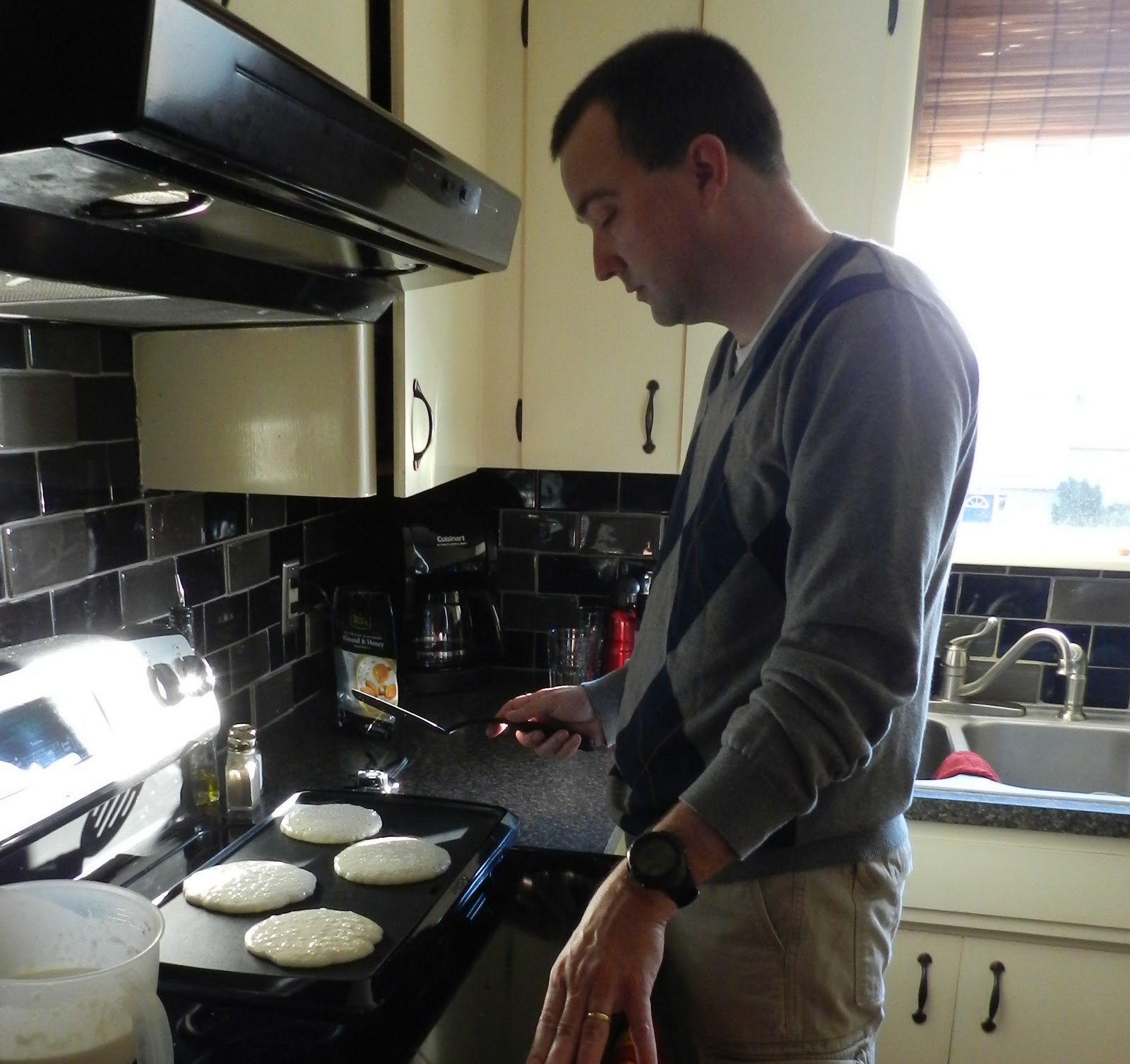
Talk about a good start to the day!


Girls, this is the kind of guy you want to marry. Yesterday he was replacing the guts of a toilet tank and this morning he’s making pancakes for his boys.


This post is not intended to be helpful in the “how-to-cook department”. It falls under “good stuff that crosses my countertop”.  If you want the directions on this sort of pancakes, all you have to do is turn the bag around.  I did make a yummy pot roast this evening though. Maybe, I’ll write about that tomorrow. (Originally posted 4/3/2011)

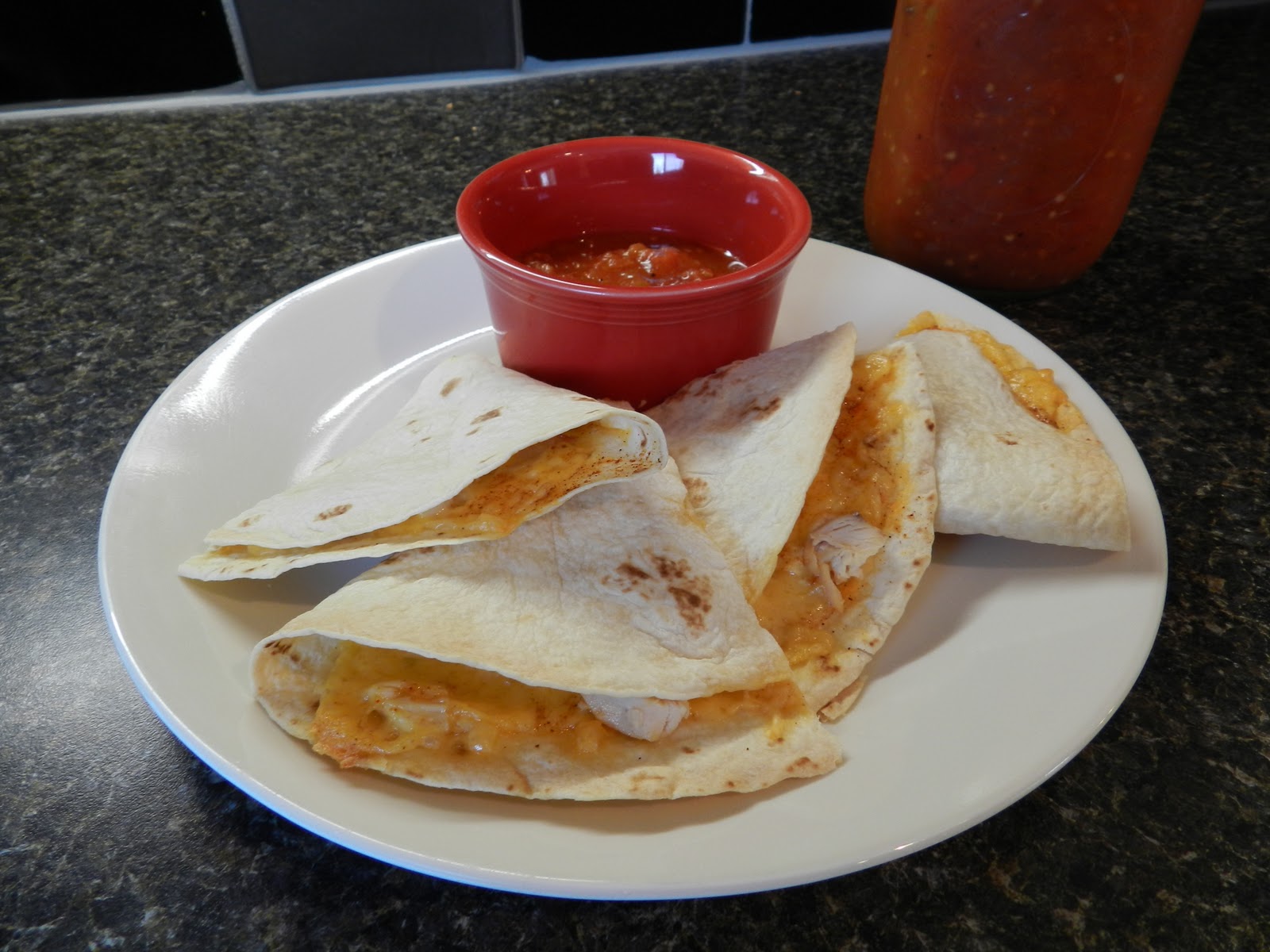
Lunch-a-Dilla “Not-a-PBJ” #1

Lunch again? How can it be?
The boys are staring holes in me!

Swiftly I grab for P.B.J.
And, hear them say, “Please, not today!”

I rack my brain for lunch ideas
Alas, I hit on quesadillas!


The boys are homeschooled, which means they’re at my mercy for weekday lunches. They think that’s a good thing, only because I tell sad tales about sack lunches in lockers and I’m not above crafting horror stories of cafeteria food while I’m presenting them with yet another… PBJ.

But, my guys have had it up to their eyeballs with peanut butter and jam!

So, I’m trying to be more creative. They think if I post lunches on this blog I will wow them with variety. Maybe they’re right. We’ll see how high the numbers go in the “Not a PBJ” series. If you’re actually reading this, keep in mind that I’m in the market for ideas and feel free to comment!

These are no culinary masterpieces – not really even deserving of a name, much less a corny poem, but at least they aren’t PBJ-s.

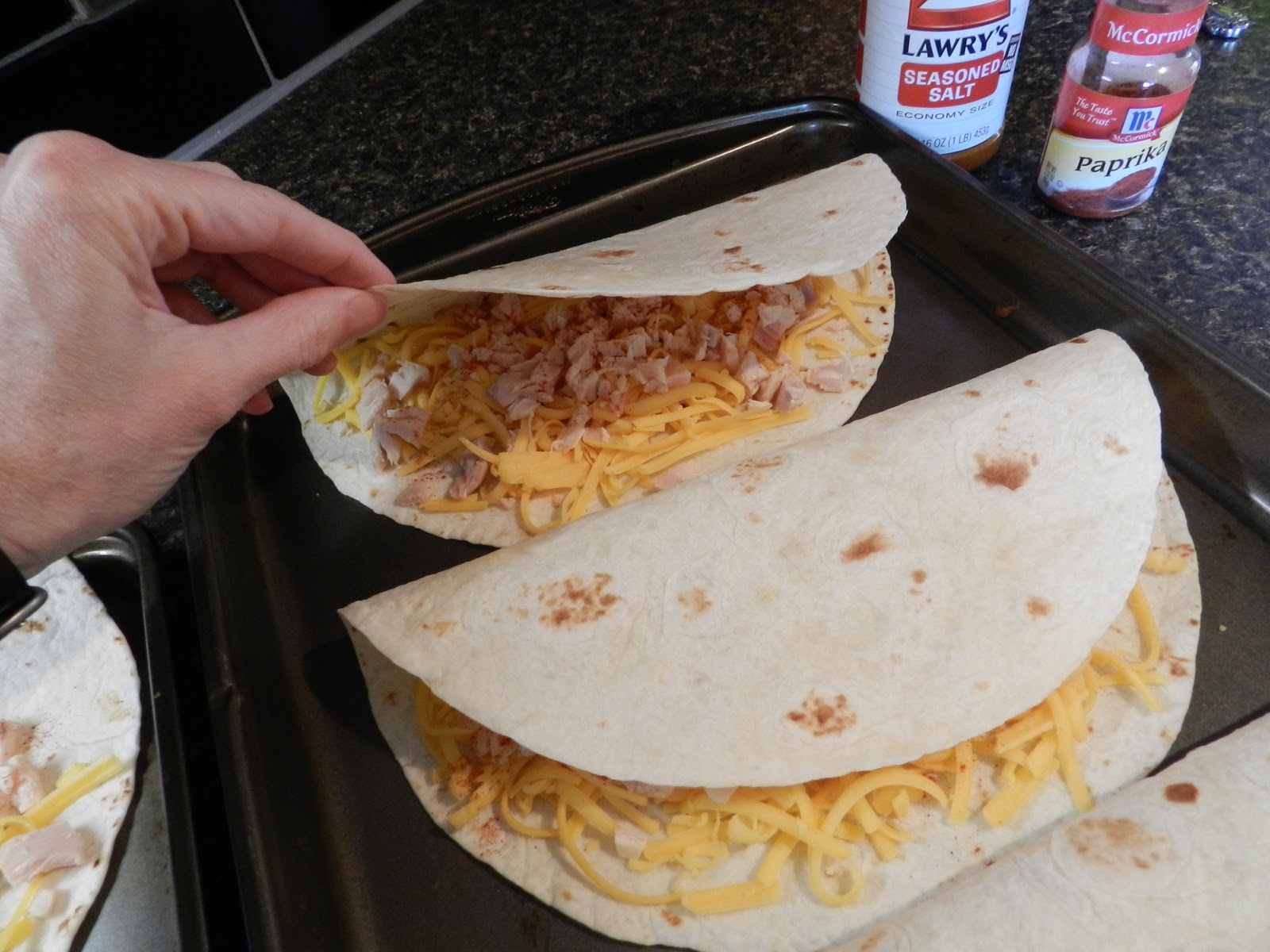
Ingredients: Tortillas, shredded cheese and chopped chicken (left over from the two rotisserie chickens that ended up in pot pie and enchiladas)


Bake at 350 degrees for about 12 minutes. Cut into wedges with a pizza cutter. Serve with salsa and/or sour cream.


Satisfied Customer

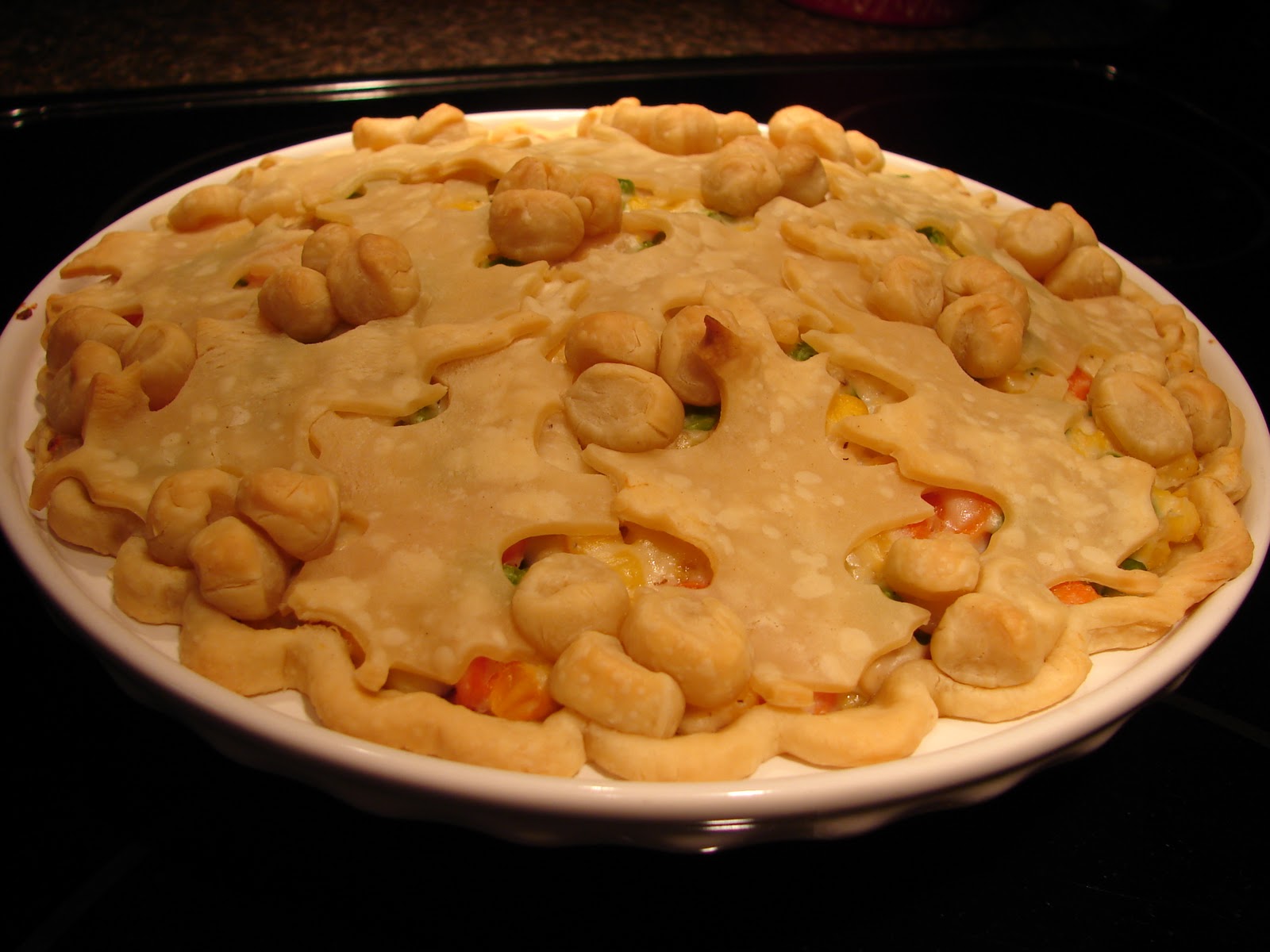
Chick-a-Pot Pie

I know this isn’t an end-of-March dish, but March has been full of November here on the Palouse, so we’re still wallowing in winter comfort food. This is one of our favorites for a bone chilling day.


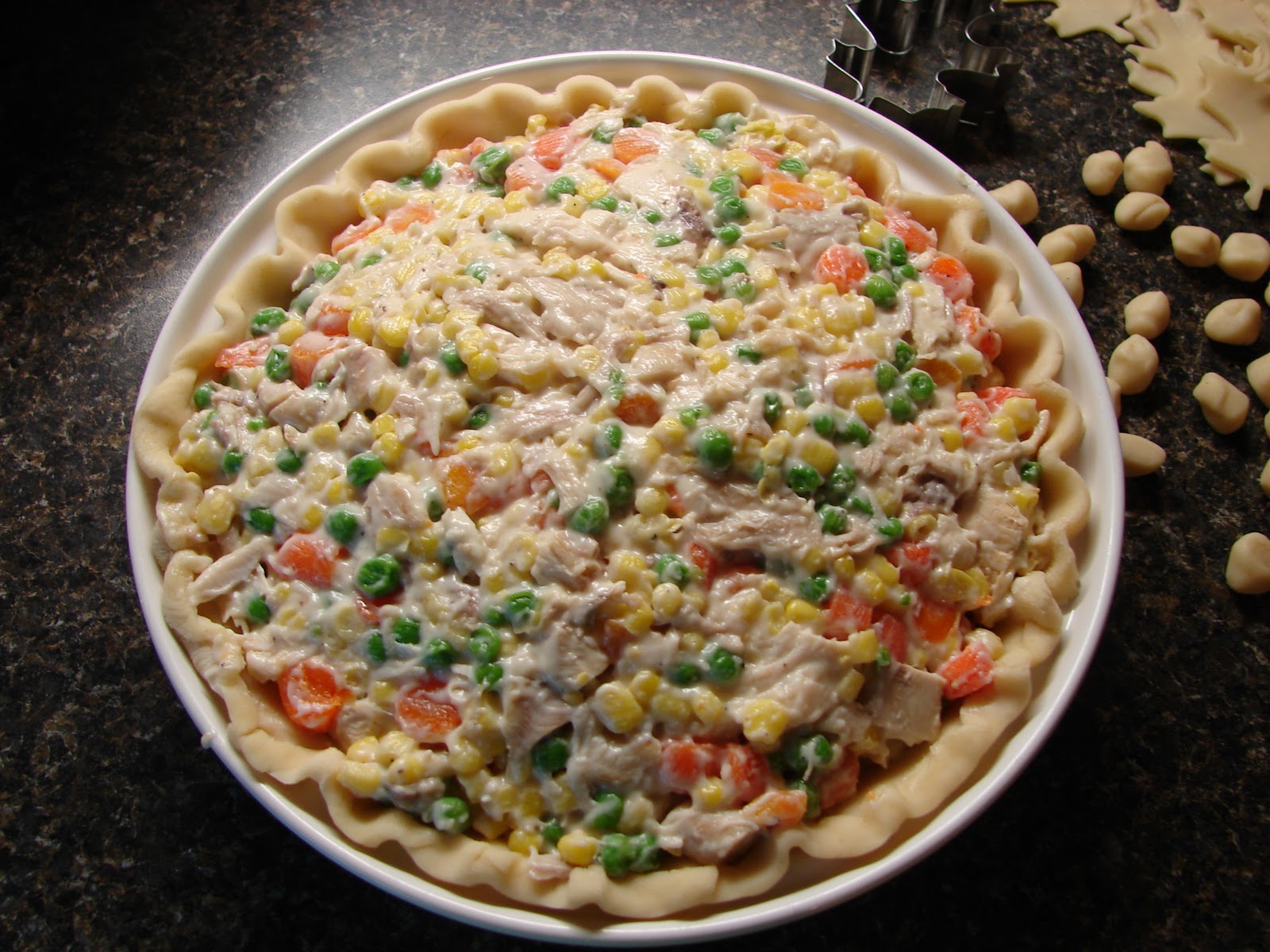
Chicken Pot Pie

Ingredients:
Pie crust for a 2 crust pie
¼ cup butter
1/3 cup of flour 
2 cups milk
Salt & Pepper
2 cups chopped cooked chicken
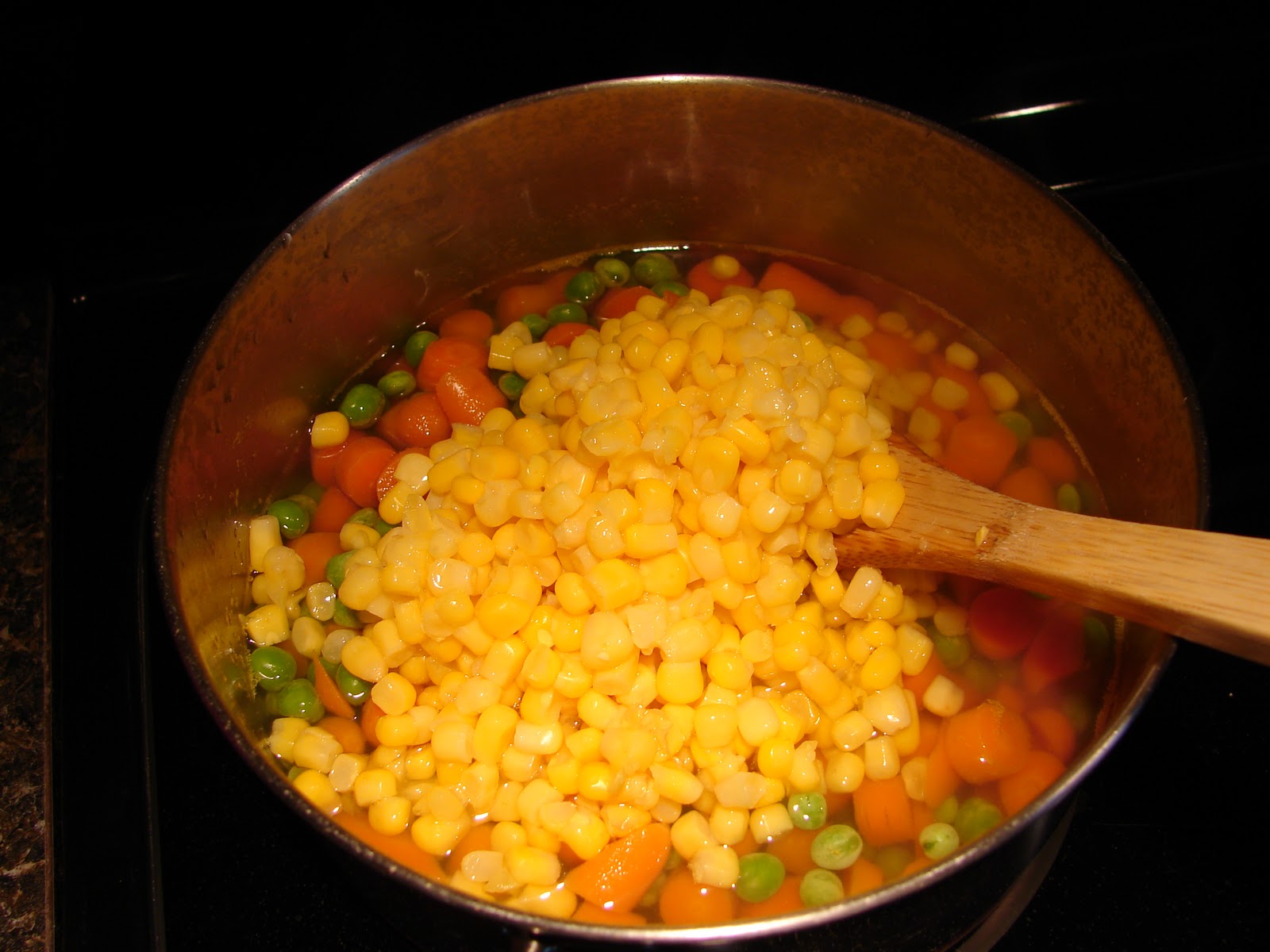
1 cup chopped fresh carrots
1 cup frozen peas
1 can corn – drained

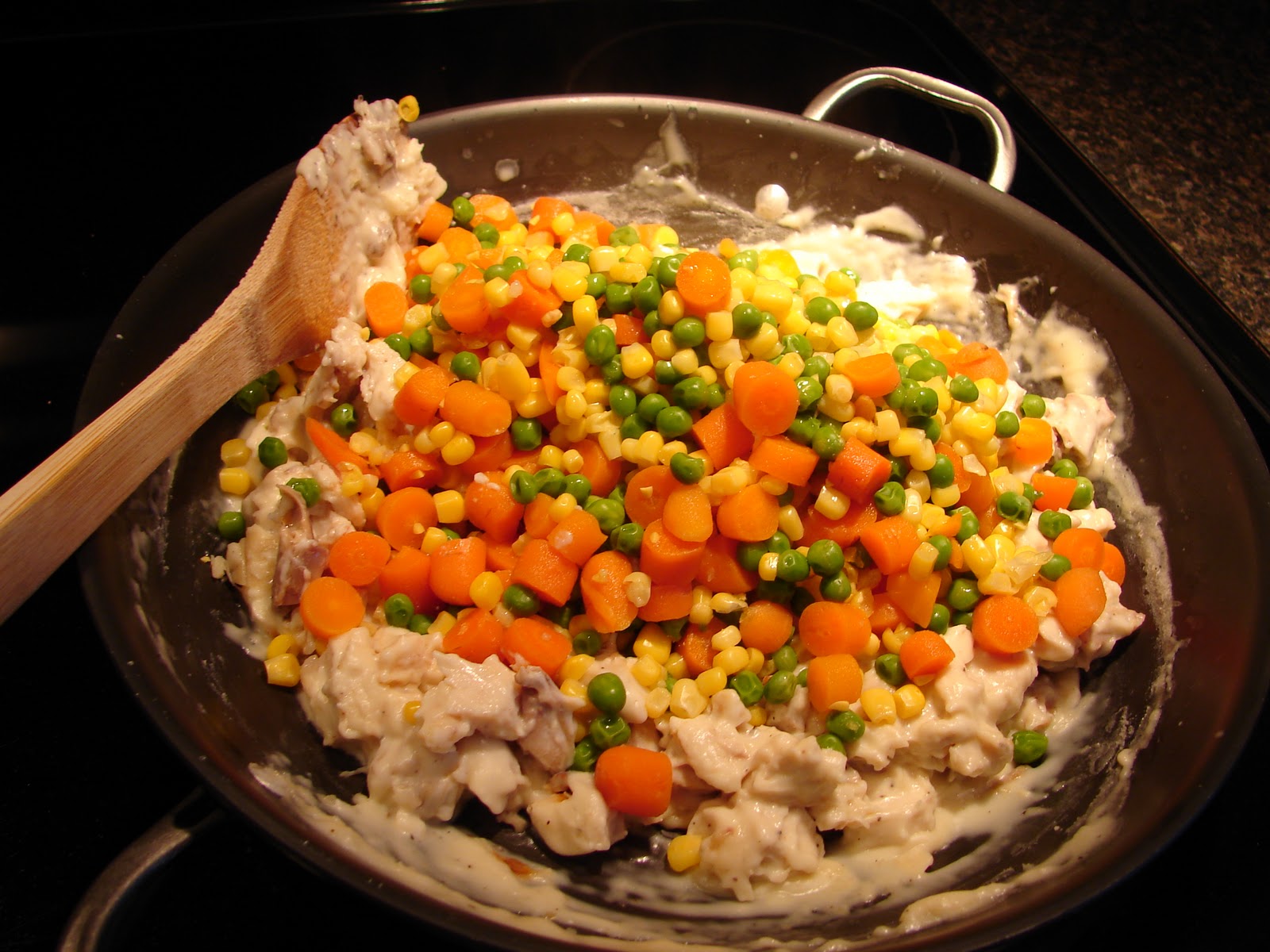
I start with the carrots first because they need time to cook. They get chopped with my usual imprecision and placed in a small sauce pan with plenty of extra water to simmer on medium heat while I work on the sauce. Later: When they are tender and the sauce is nearly done I dump the frozen peas and the drained can of corn in and bring the water back to a boil for just long enough to tenderize the peas and heat the corn. If you start them all at the same time, the green and yellow will be mush by the time the orange is tender.


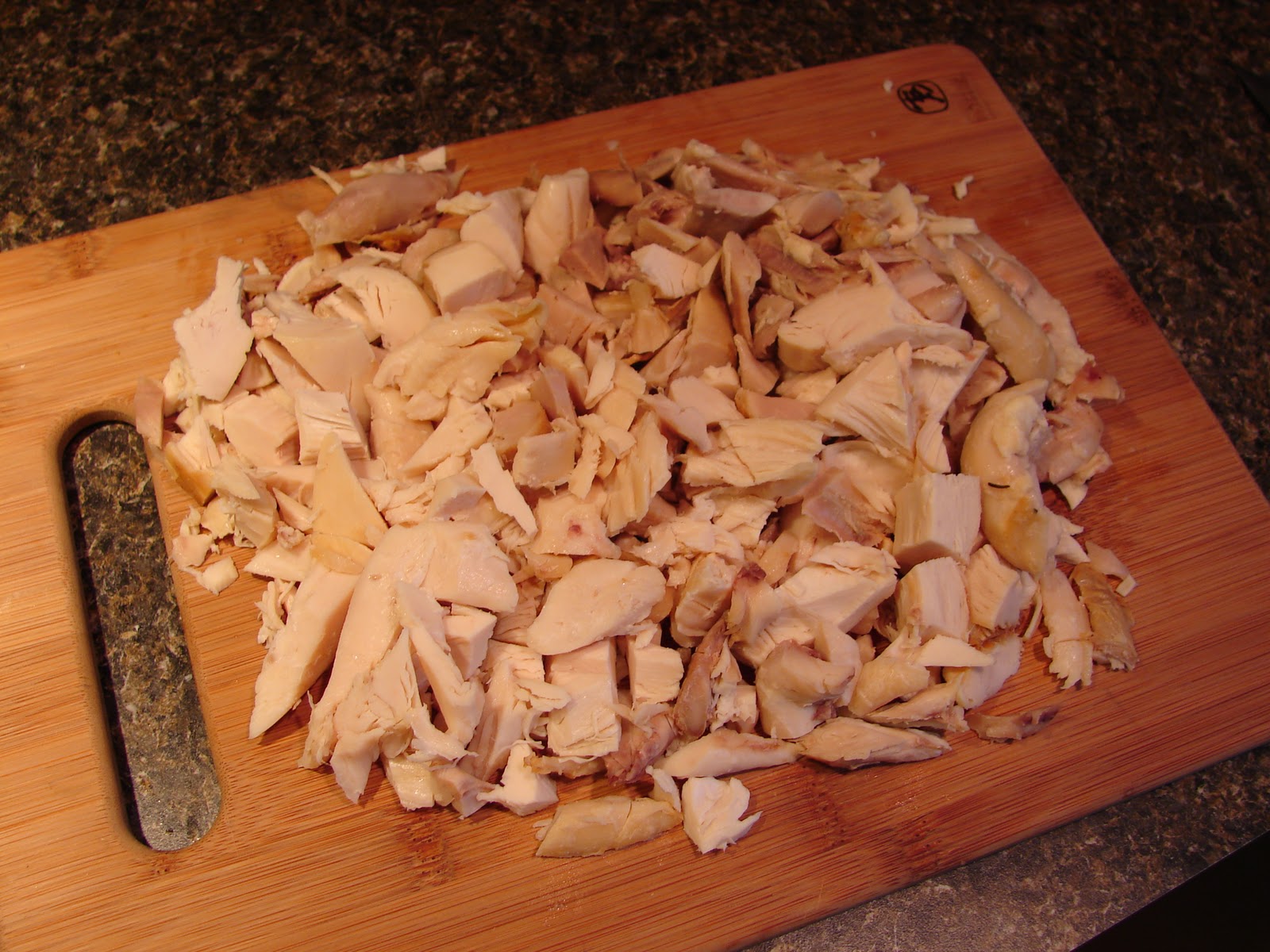
Next I chop the chicken. My favorite is a rotisserie chicken from the grocery store, but any chicken will do.


The next step is to start the sauce. See All-Purpose White Sauce AKA “Cream-of-Whatever” for instructions.

While the sauce is thickening, I start on the crust. I wish I could say I do this from scratch, but the truth is: I usually don’t. But I’m planning to get better about that.


I’m not proud of the perfectly able bodied food processor next to the Pillsbury box.

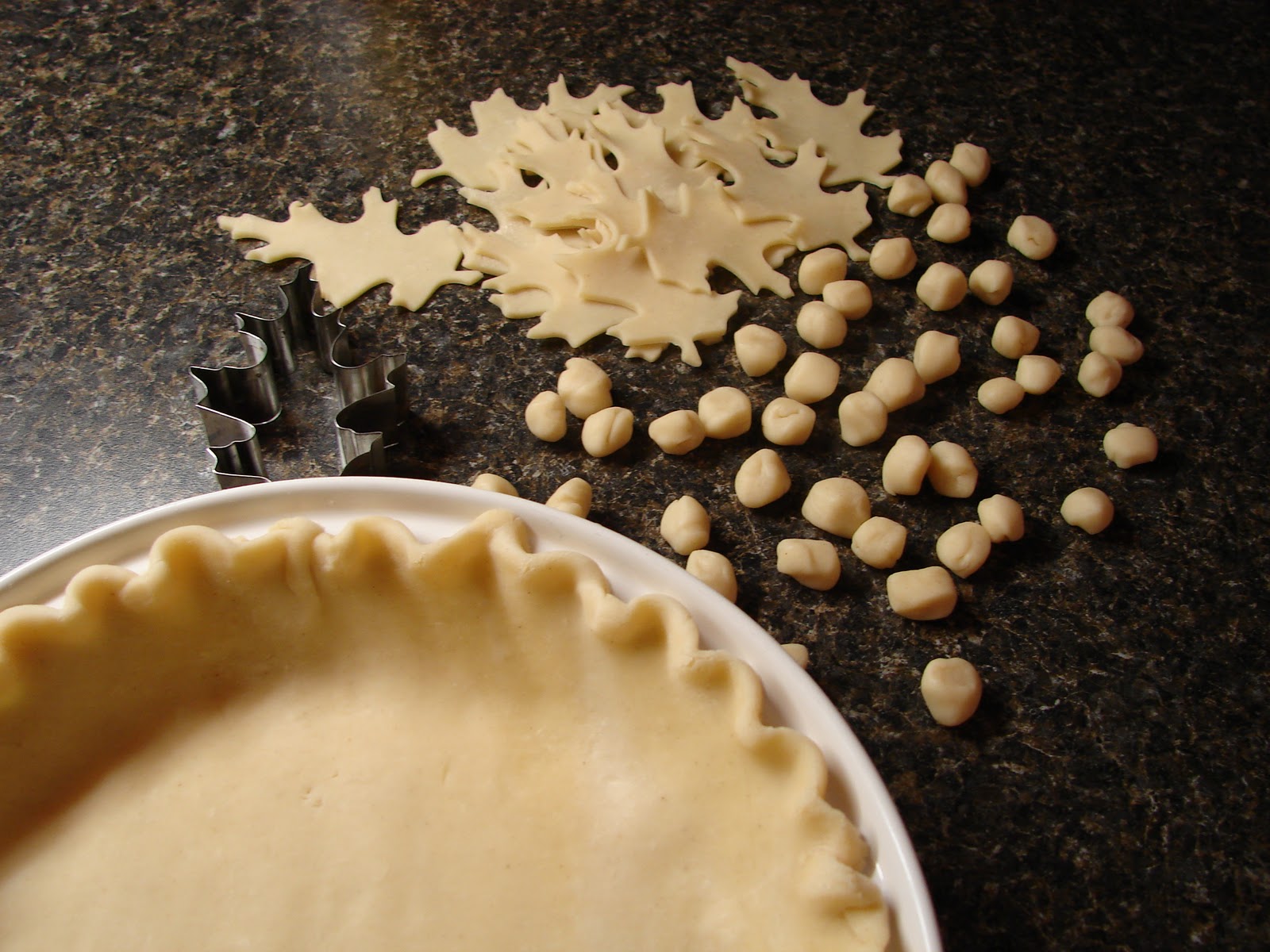
After spreading one of the rolled out crusts in the bottom of the pie plate, it’s time for some play-dough style fun – unless there’s a child on hand. Then I maintain my dignity and let them handle the next couple of steps.

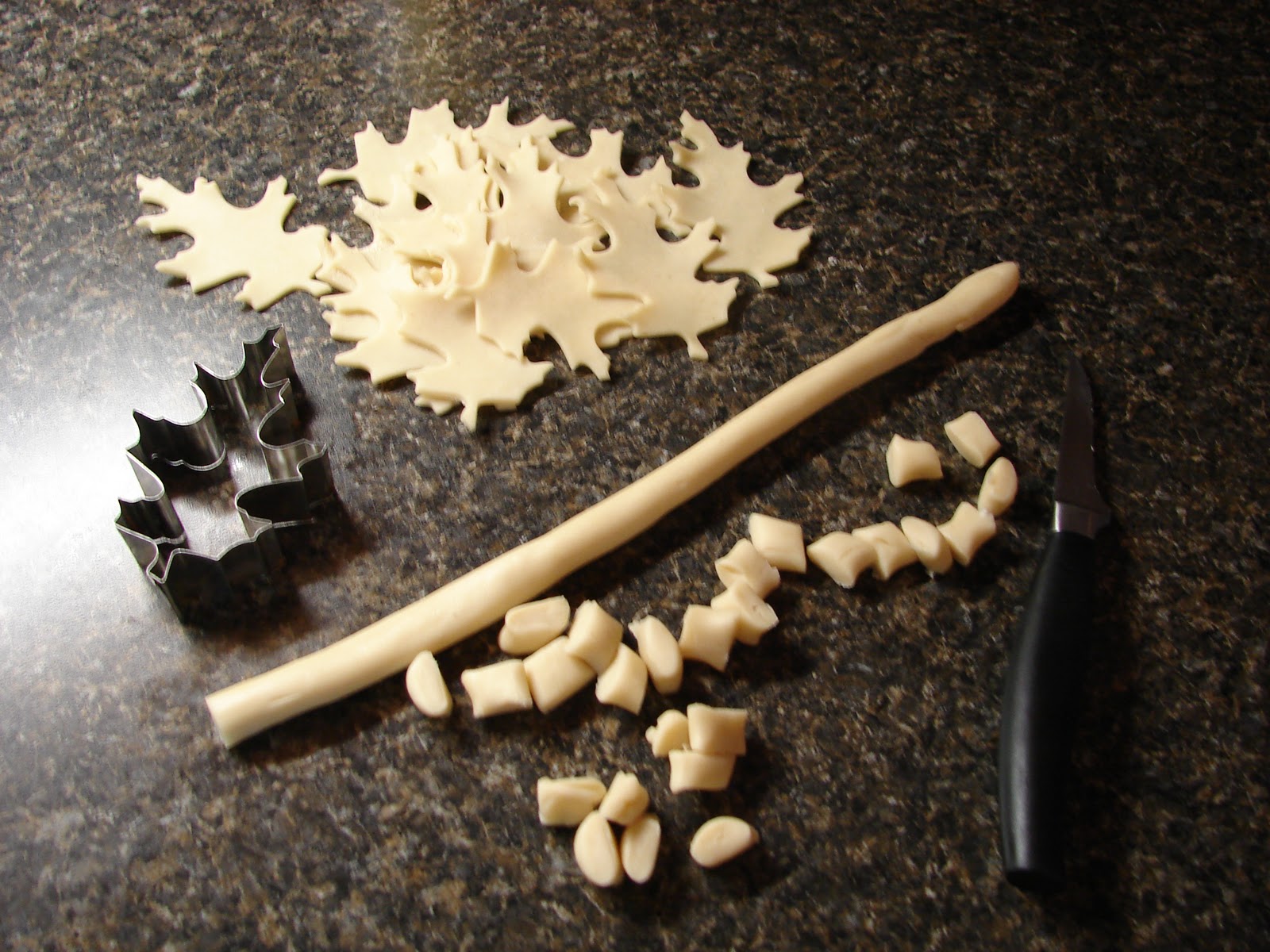
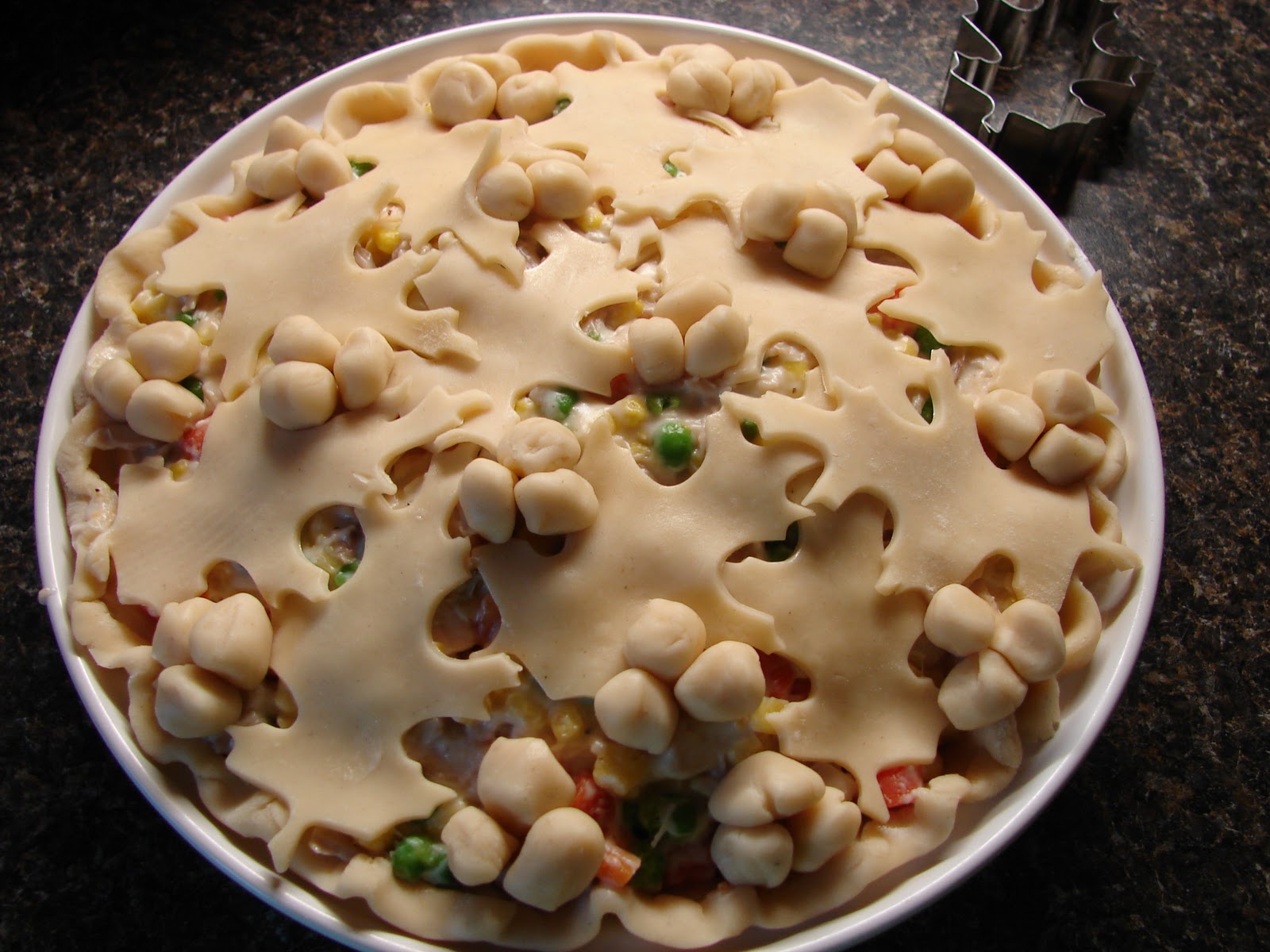
I (or the child) get out a cookie cutter and cut the dough into shapes, usually leaves. Then with the scraps that are left, we make snakes!


CAUTION: Don’t let child helpers become emotionally attached to their snakes. The next step is to chop the snakes to bits and roll the bits into balls.


Waiting on the Filling

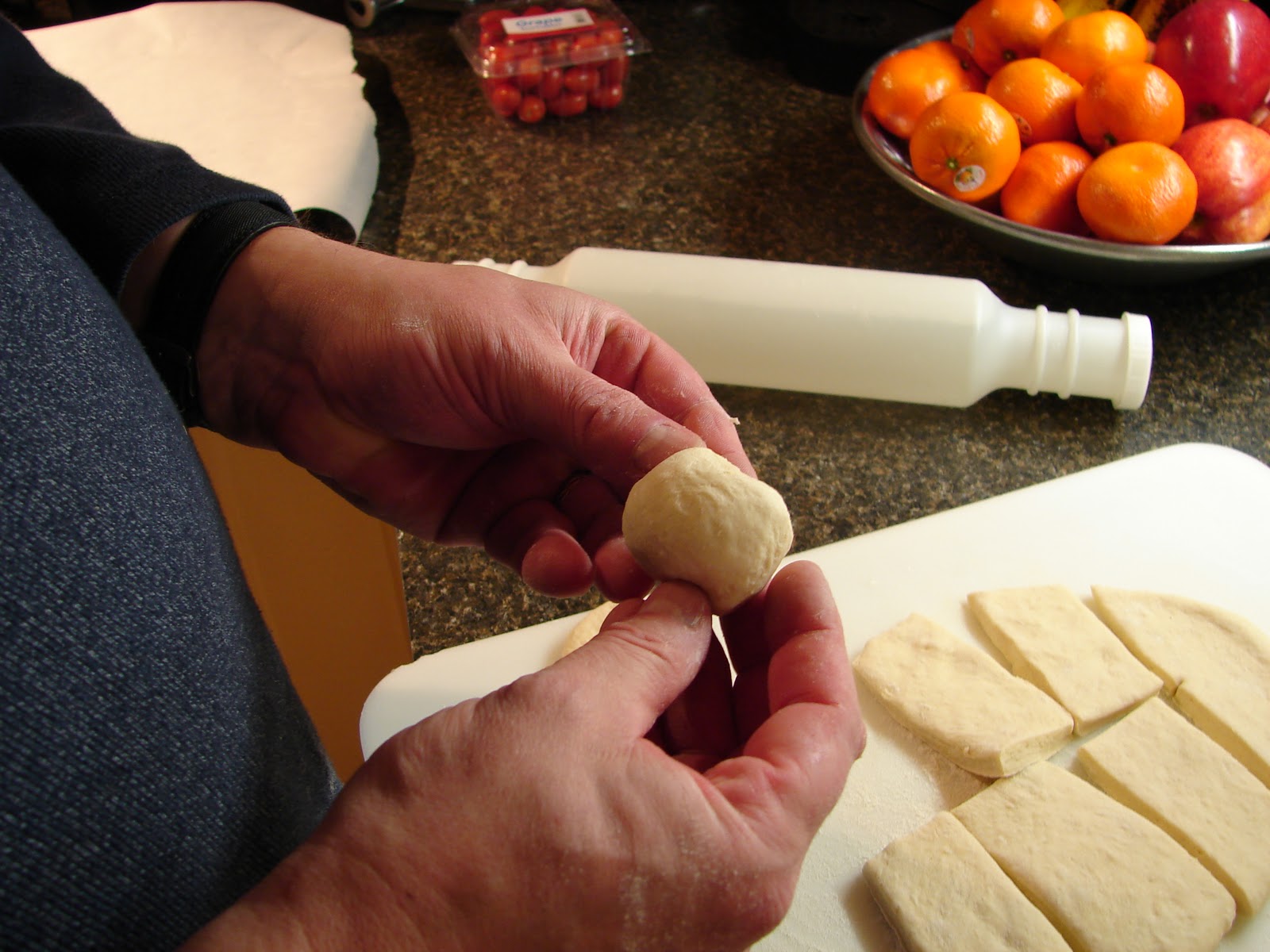
Those little balls turn out to be the stuff my family squabbles over when the pie is finished. After all, who doesn’t like little balls of pie crust! The trick is to keep dough lovers from eating them before they make it into the oven.

The veggies and the sauce are about done by now. Turn the oven on to pre-heat at 375 degrees.

Stir the chicken into the sauce.

Drain the vegetables thoroughly before adding them to the sauce. I let them stand and dry for 3-4 minutes in the strainer, because wet carrots and their friends can ruin the sauce you’ve worked so hard to thicken.


Bring the sauce back to steaming hot on the stove before filling the pie plate otherwise the crust will be soggy.


Arrange the fruit of your art atop the steamy filling. I like to group the little balls of goodness into threes. It looks pretty that way and it allows my children to practice skip counting while they’re making sure nobody got more than their “fair” share.


Bake at 375 degrees for 15-25 minutes until you like the look of the crust. If you like a really crispy crust you can bump the temperature up a bit.


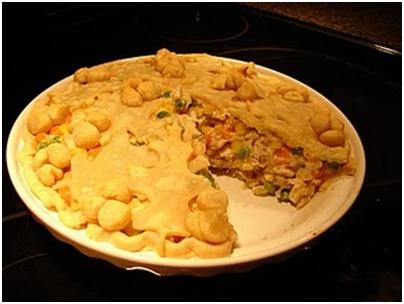
Not Perfect – but Very Tasty!

This one probably could have used another 5 minutes or so in the oven, but it was already about 7:00PM and the boys were circling the kitchen like piranhas. It was better to sacrifice blogging perfection than keep them waiting any longer.

Basic White Sauce or “Cream-of-Whatever”

The fancy French word for this sauce is “Béchamel”.

I call it “Cream-of…” sauce, because it’s basically what you get when you buy a can of cream-of-mushroom (or cream-of-whatever-else) soup to use in cooking – only it’s better – and it makes you feel like a real cook.

Variations on this sauce form the base for homemade macaroni-n-cheese, Alfredo, tuna casseroles, creamy soups, pot pie fillings, biscuits-n-gravy and more. It never stands alone in the form you see below, but knowing how to get the base layer accomplished is a handy tool for so many recipes.

Medium/Thick Sauce:
1/4 cup butter (or another fat)
1/4 cup flour
2 cups of milk

Start by melting the butter on medium –low heat. When it’s bubbly, toss in the flour. (Other fats can be used according to recipe directions, and vegetables can also be added to saute at this stage but otherwise the procedure remains the same.)


Hot Butter with the Flour Just Added


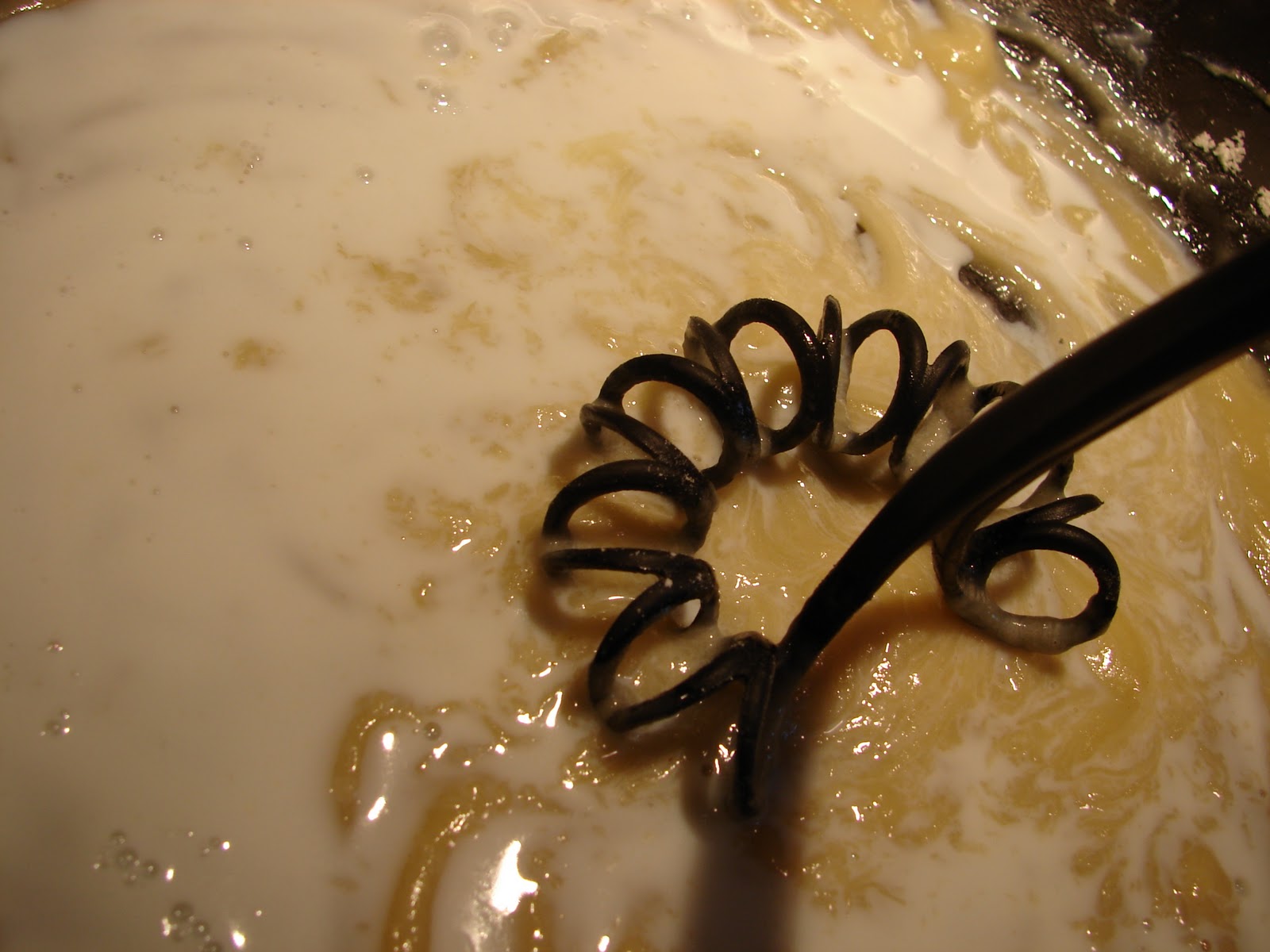
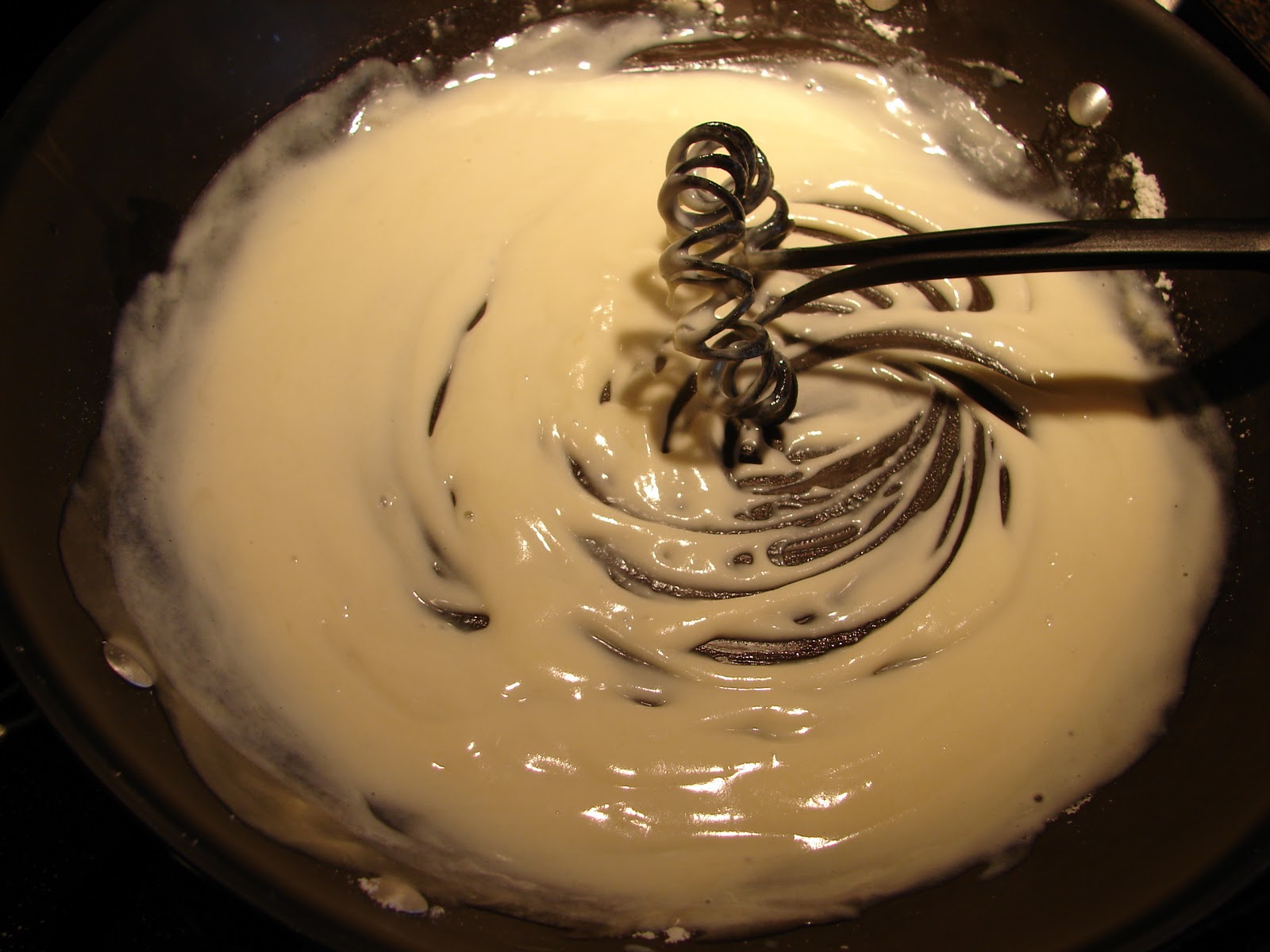
Mix until it makes a smooth paste. Keep stirring until it is bubbly again and the butter begins to turn golden. The flour needs to cook a bit at this stage to avoid having a pasty texture in the final sauce. (Keep the heat at medium or less and go slow if this is a new procedure for you.)


Butter and Flour

Begin slowly adding milk – about ¼ cup at a time to start with and mix everything back into a smooth paste before adding more.


Add milk in small doses.


Add more milk when it’s back to looking like this.

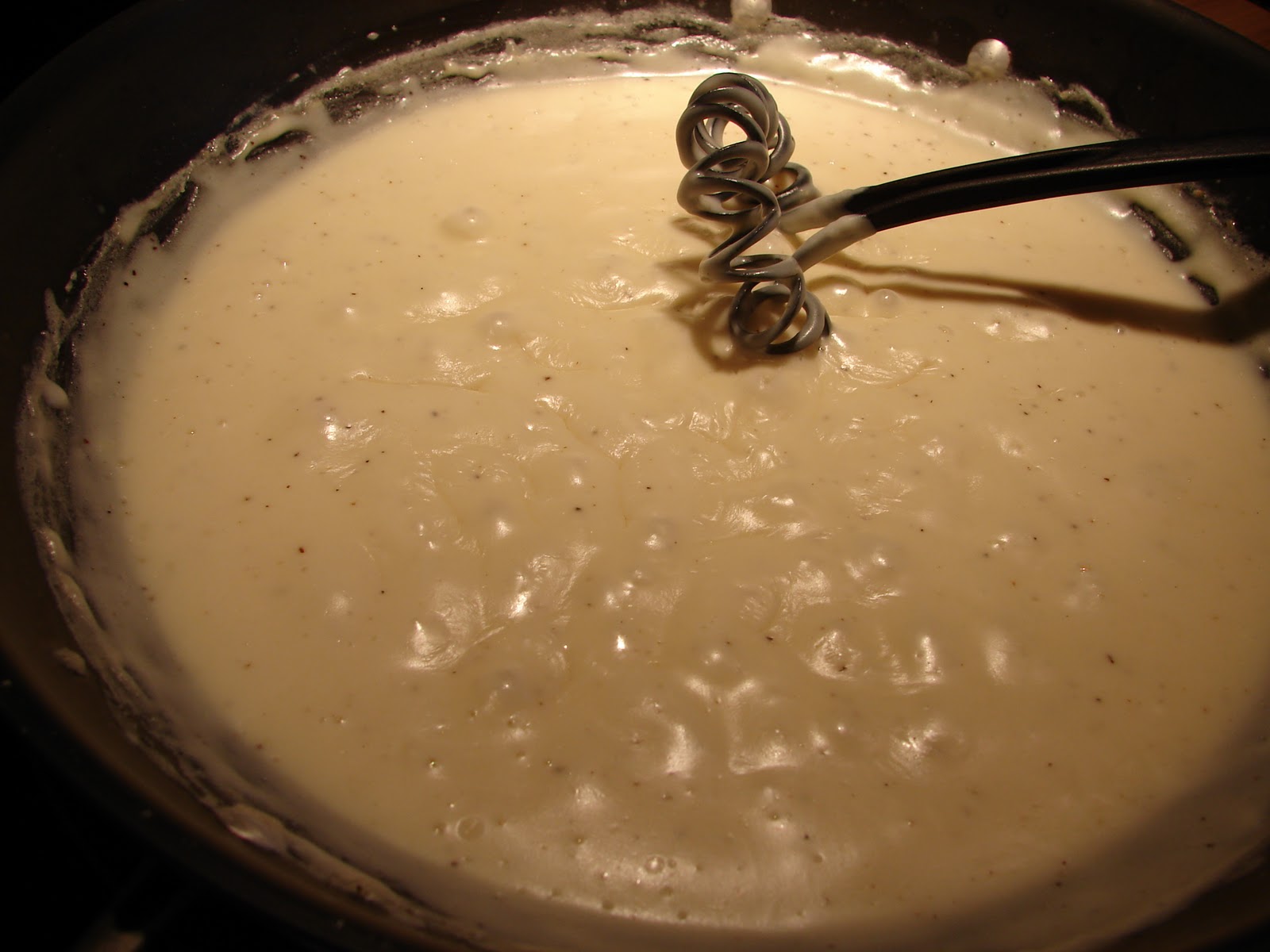
After the first cup of milk has been added and the sauce is thinning out, I go ahead and dump the final cup of milk in all at once. It will then seem too runny, but as it simmers over low-medium heat for the next 10-15 minutes it will thicken considerably. While it’s simmering it needs to be whisked frequently (at least every 60 seconds) or it turns into various kinds of messes. Add salt and pepper to taste – which, of course, means you have to taste it.


This is about where you want it for sauce – to add cheese, etc…

My Man’s First Married Meal

I got married about 20 years ago, young and naive, but very blessed. Ric was a great catch.


Poor guy! He had no idea what he was in for the next time I fed him!

Our honey moon was a five-day drive from Macon, Georgia to South Prairie, Washington. My grandmother lived there and it was conveniently close to Fort Lewis, where Ric’s first assignment in the Army was to help supervise ROTC summer camp for two months before proceeding to Fort Sill, Oklahoma.

We were newly-weds in my Grandma’s house which was weird, but my grandma was very cool and we were pretty close to broke, so the price was right.

The price was also SO right on a perspective apartment in Lawton, Oklahoma that we decided I should go ahead of Ric to nab that dive before any other bottom feeders snagged it. The trek with two cats in a Blazer and a trailer that I couldn’t backup is another story, but it places me in Oklahoma, well out from under the umbrella of Grandma’s cooking, to greet my husband upon his triumphant arrival.

I should mention here that I didn’t know how to cook anything that mom hadn’t dictated via notes atop my formative kitchen catwalk (that’s the countertop) regarding what to drop in the crock-pot before I left for my days in middle school.

But…I was married now.

So, I tore into to the stack of wedding gifts and unboxed my very own slow cooker, with a chic early ’90’s cornflower adorning the poorly designed crock. I was in my microscopic culinary comfort zone but married life called for something sexier than the meat and veggies that mom had always set forth.

Chili, of course!

I can’t even remember what I might have dumped into that mess, but I’m pretty sure that I wasn’t humble enough to consult a cookbook. Ugg!

Anyway, everything was fine until Ric was getting closer and the chili was runny. My solution seemed ingenious at the time – yellow cornmeal! After all, chili goes SO well with cornBREAD. Surely dumping cornMEAL into chili would be a tasty way to soak up extra “juice” and perfect my first wifely culinary offering.

For the record, cornmeal does NOT smooth out the texture of runny chili. It hangs tough in the face of tomato acid and remains just as hard and grainy as it is raw. And, the chili is still runny.

After 30 hours on the road, Ric arrived to his first romantic, home-cooked meal.

I wish you could see the color in my face twenty years later as I recall that first taste. I learned a valuable lesson that night about my own kitchen intuition and began to consult the printed work of experts.

My officer and gentleman never acknowledged any issues. What a man!

J.P.’s Potato and Leek Soup

Some people aren’t sure what a leek looks like, so I thought I’d draw one. Then I got carried away with a gardening memory from last summer. What you see below is my rendition of the day I found the supposedly dignified Rouge Vif d’ Etemps Pumpkin plant dragging a poor innocent leek down the row by its throat. It was funny for everyone but the Leek. Silly pumpkin! Leeks are for kids!


Pumpkin kidnaps a Leek!


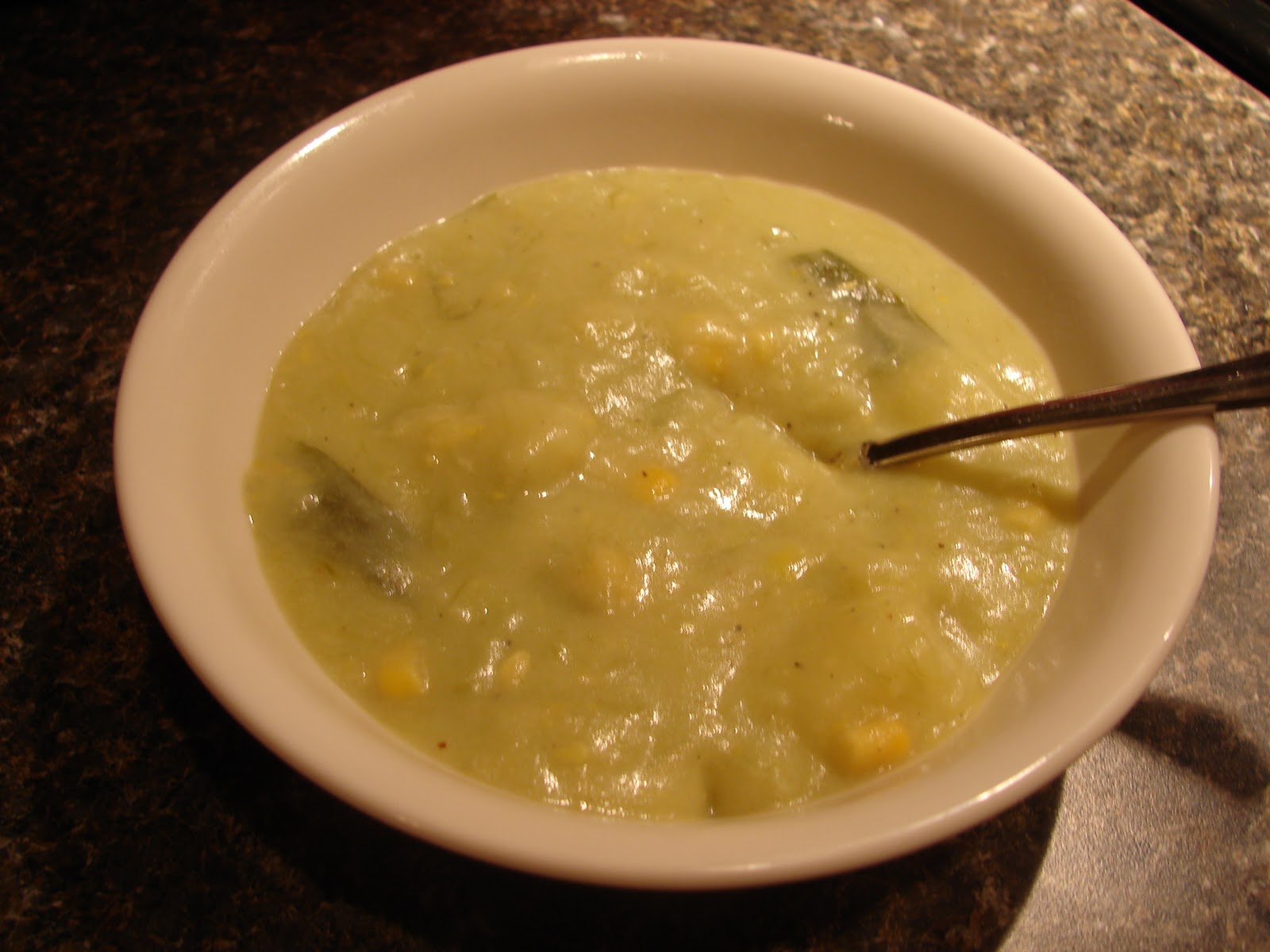
Maybe not all kids like leeks, but mine sure do. J.P. spotted the last bag in the freezer a few days ago and launched a campaign for soup until I let him loose in the kitchen. He did a marvelous job! (Original posted 3-18-2011 on the old blog.)


Potato and Leek Soup

Recipe:
¼ – ½ cup butter
¼- ½ cup flour (equal to the butter)
2 cups milk
1 quart of chicken or vegetable broth
1 large or 2 medium leeks chopped 
1 can of corn
6-10 small Yukon gold or red potatoes peeled and chopped
Salt & pepper to taste


The Last Veterans of the Great Pumpkin Raid after winter in the Freezer

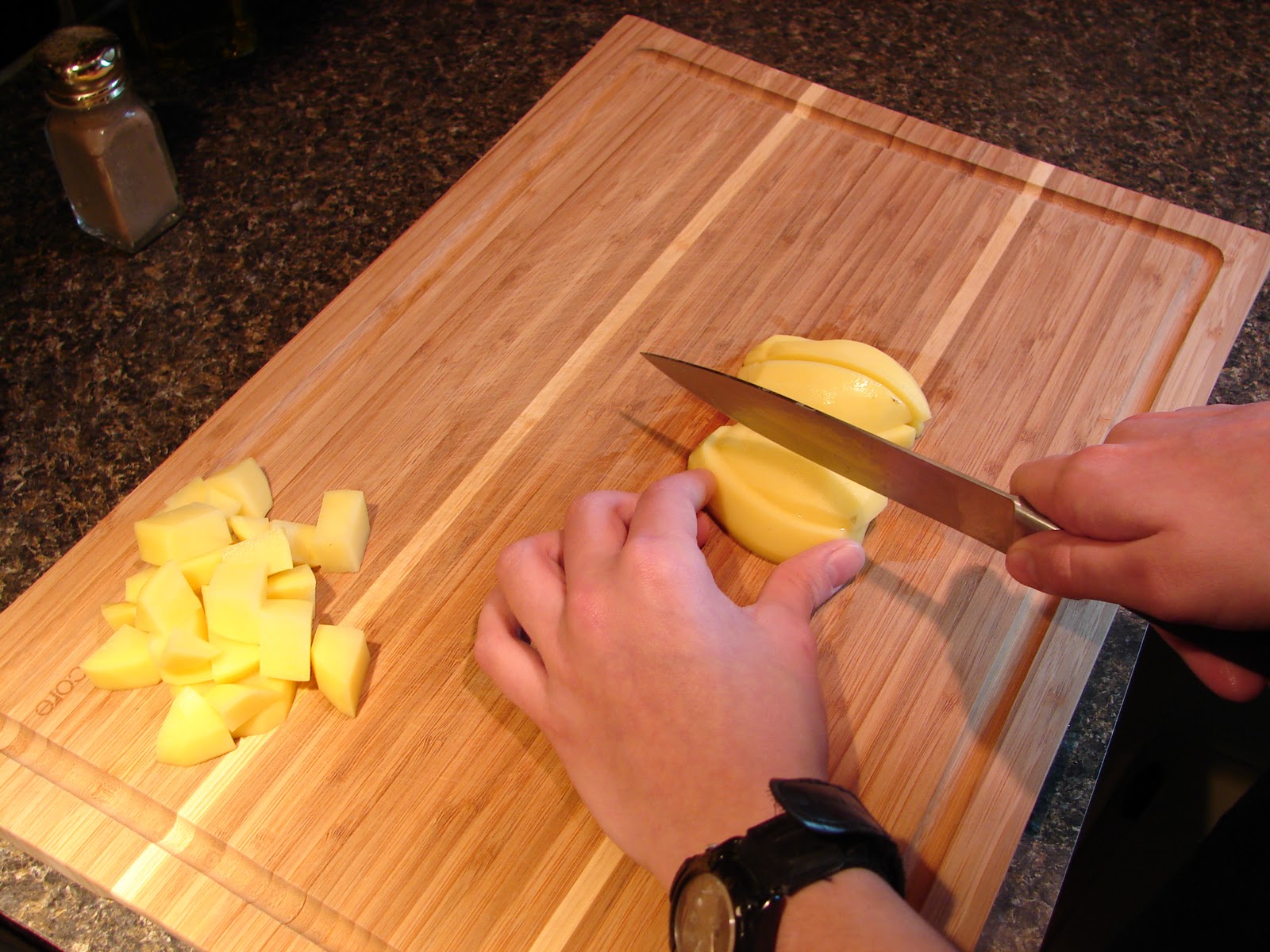
First, peel and chop the potatoes.


You don’t need these pictures, but I’m proud of my kiddo!

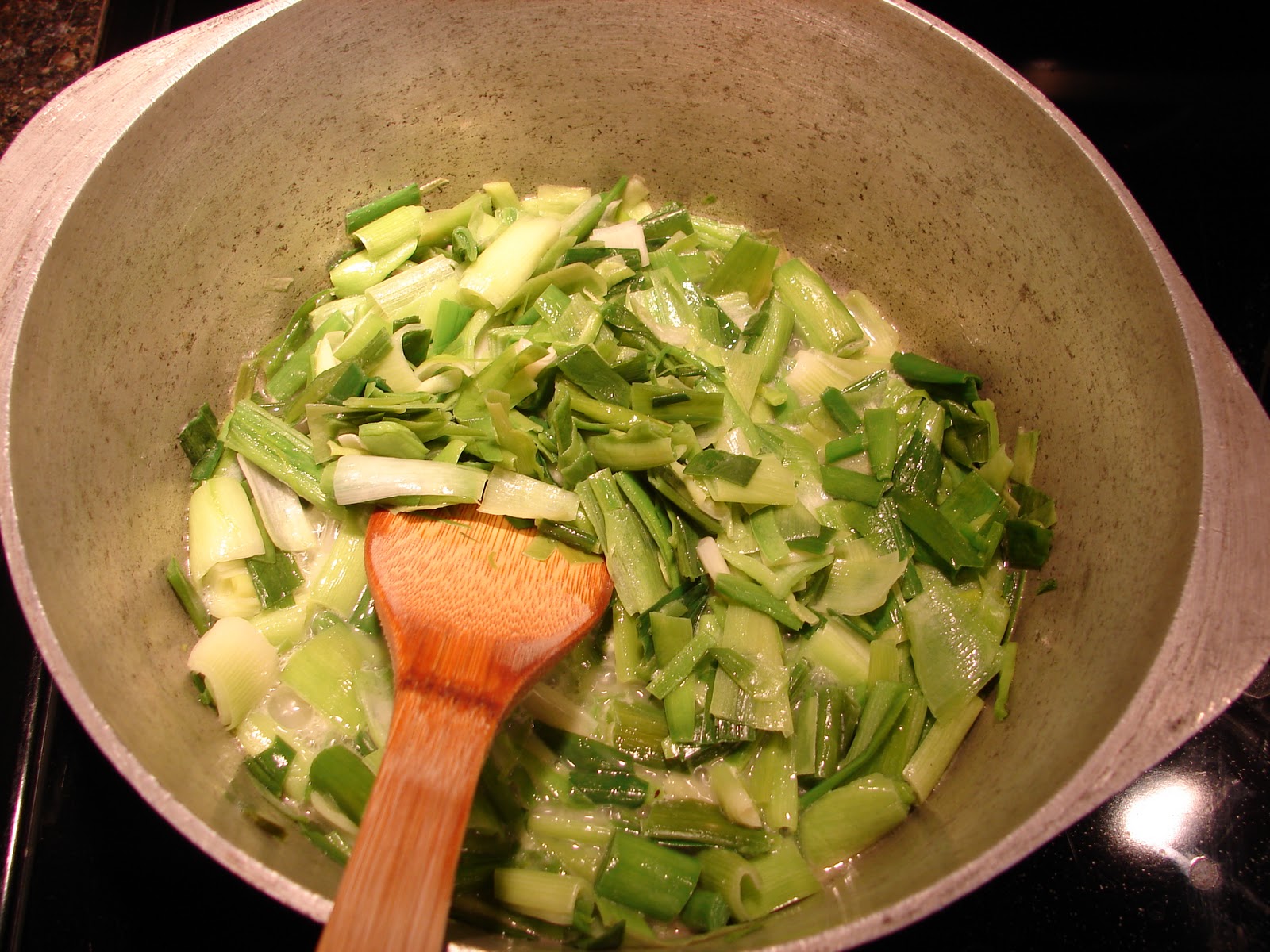
Heat the butter to bubbling, toss in the leeks and sauté until they are soft and the house smells absolutely FABULOUS.


Leeks in the Butter

Dump in the flour and stir to make a paste. (We missed pictures of this step because the neighbors stopped in with their adorable baby and JP and I were both so happily distracted that it was all we could do to remember to stir!)


J.P. with baby Will.

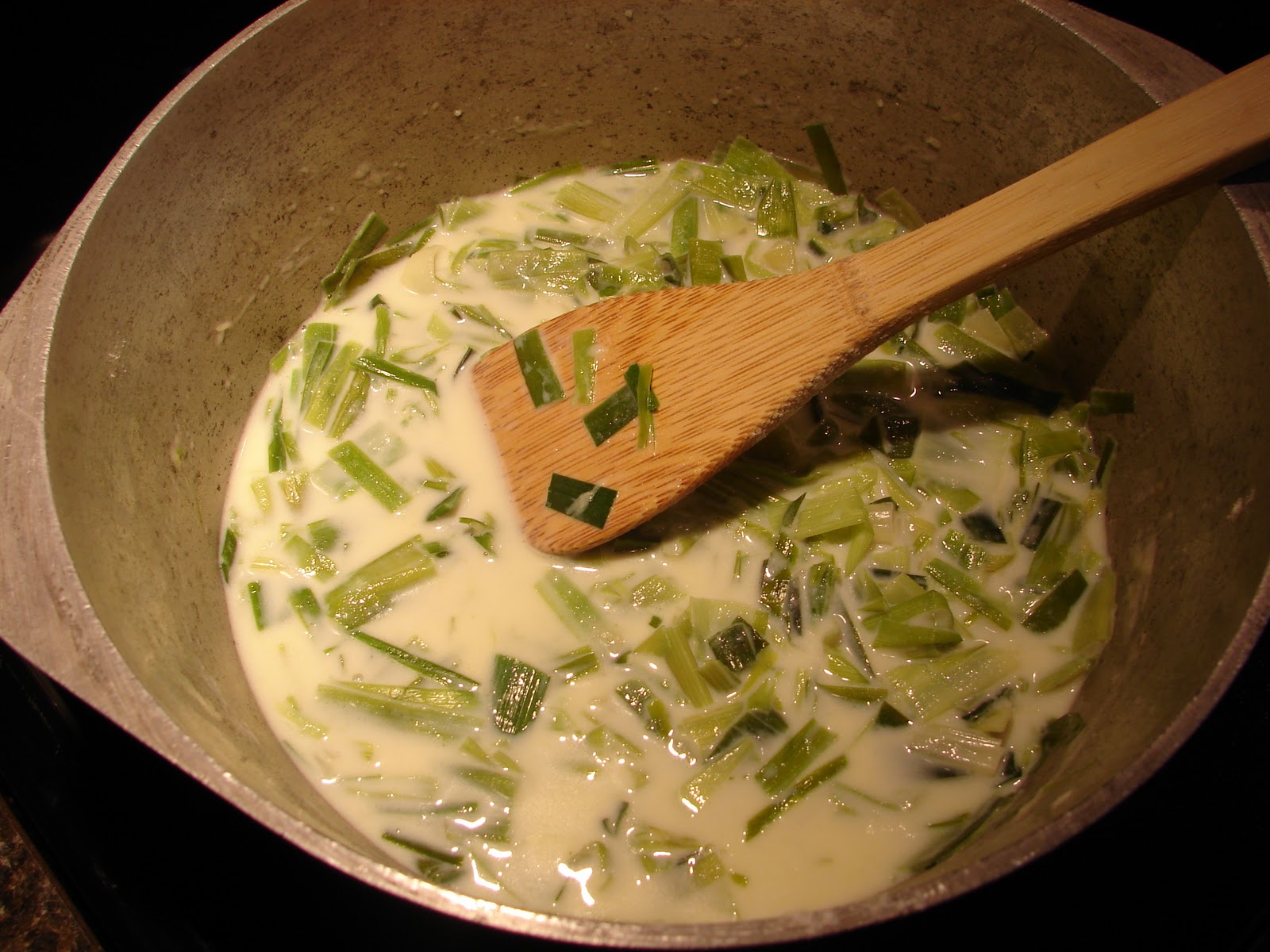
Start adding the milk, little by little, stirring until you have a smooth paste before adding more. Once you’ve added it all you should have a liquid base without lumps. (If you’d like a richer soup you can use whole milk or even substitute a little bit of half-n-half for some of the milk.)


After the Milk has all been Added

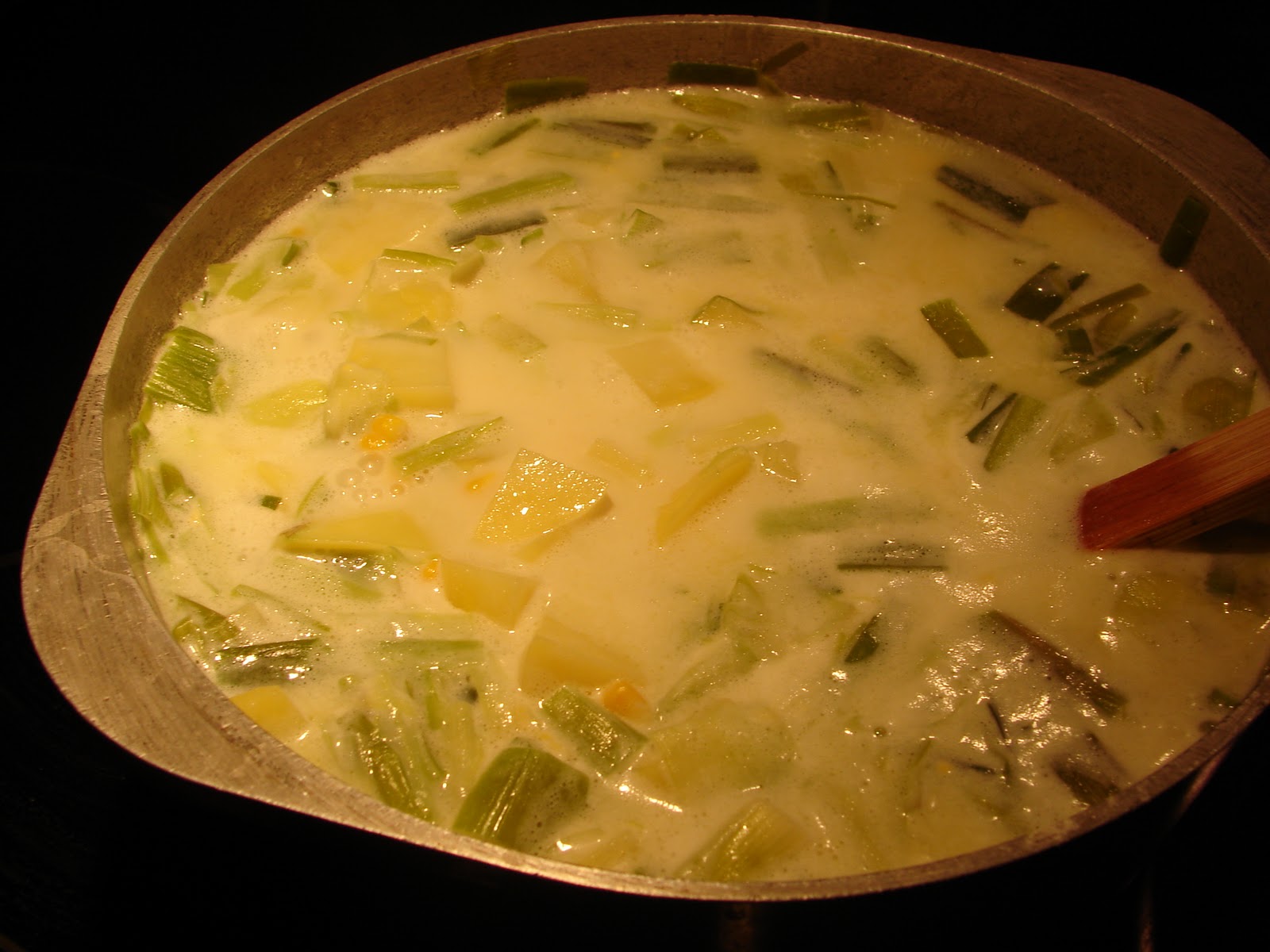
Add the rest. Pour in the broth and dump in the diced potatoes and corn. The smaller the chunks of potato, the faster they cook.


Ready to Simmer for a While

Let it simmer until the potato chunks are tender enough to break with the edge of a wooden spoon. Taste, and add salt and pepper until it’s just right.


Just about Ready

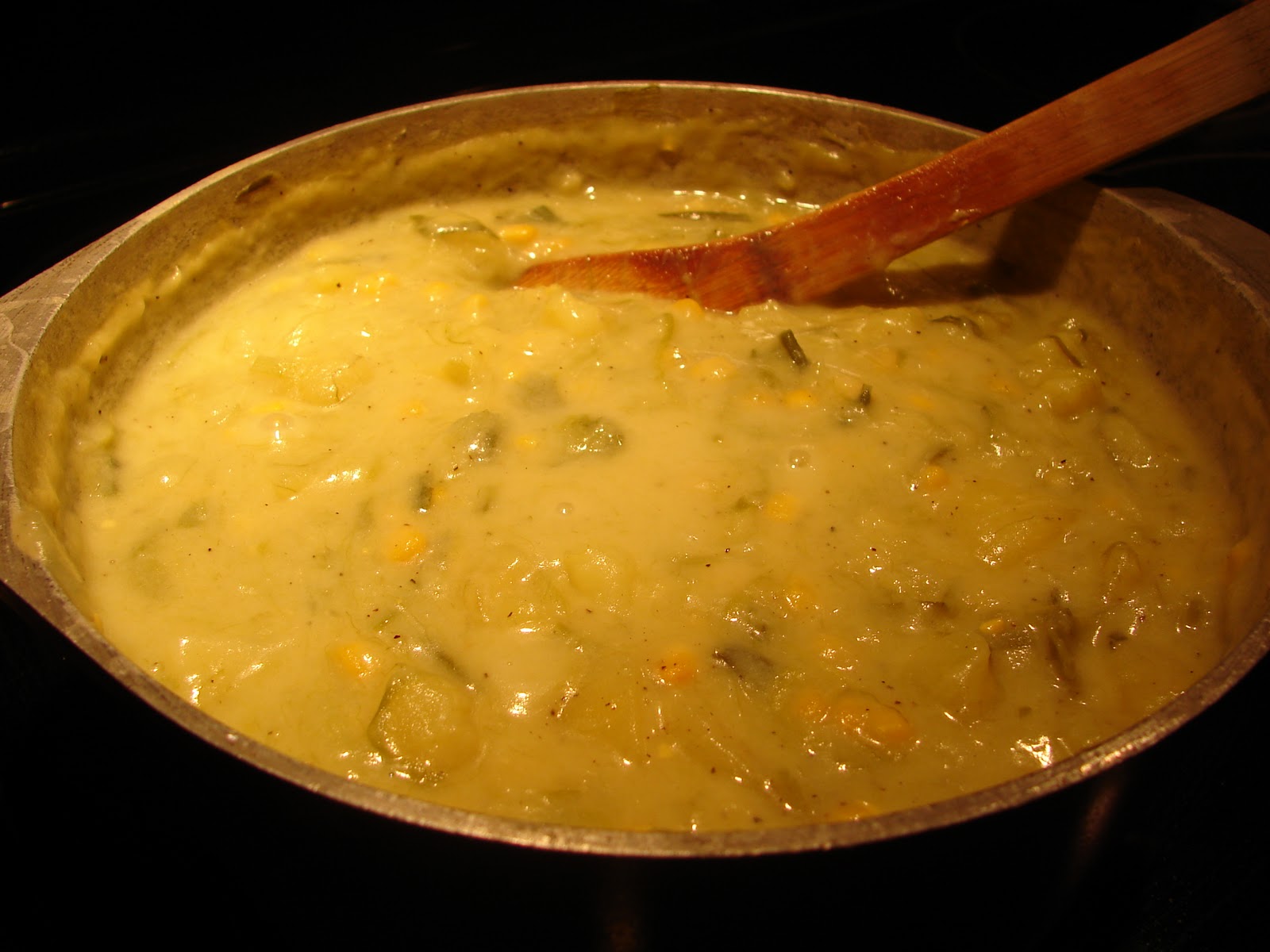
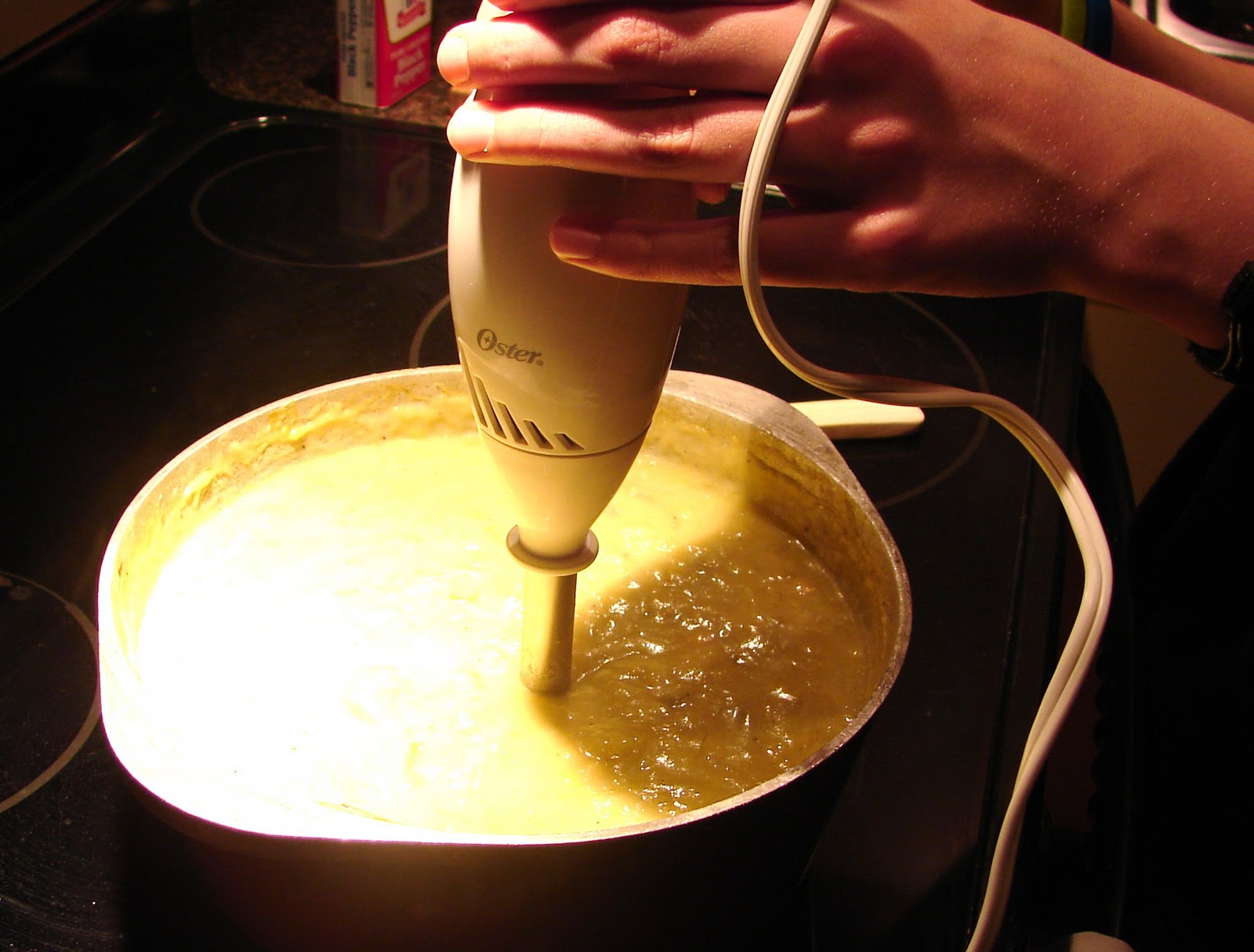
If you like a creamy soup, then stick the immersion blender into the pot and run it for a few seconds until you get the consistency that suits your fancy.


Making Creamy Soup

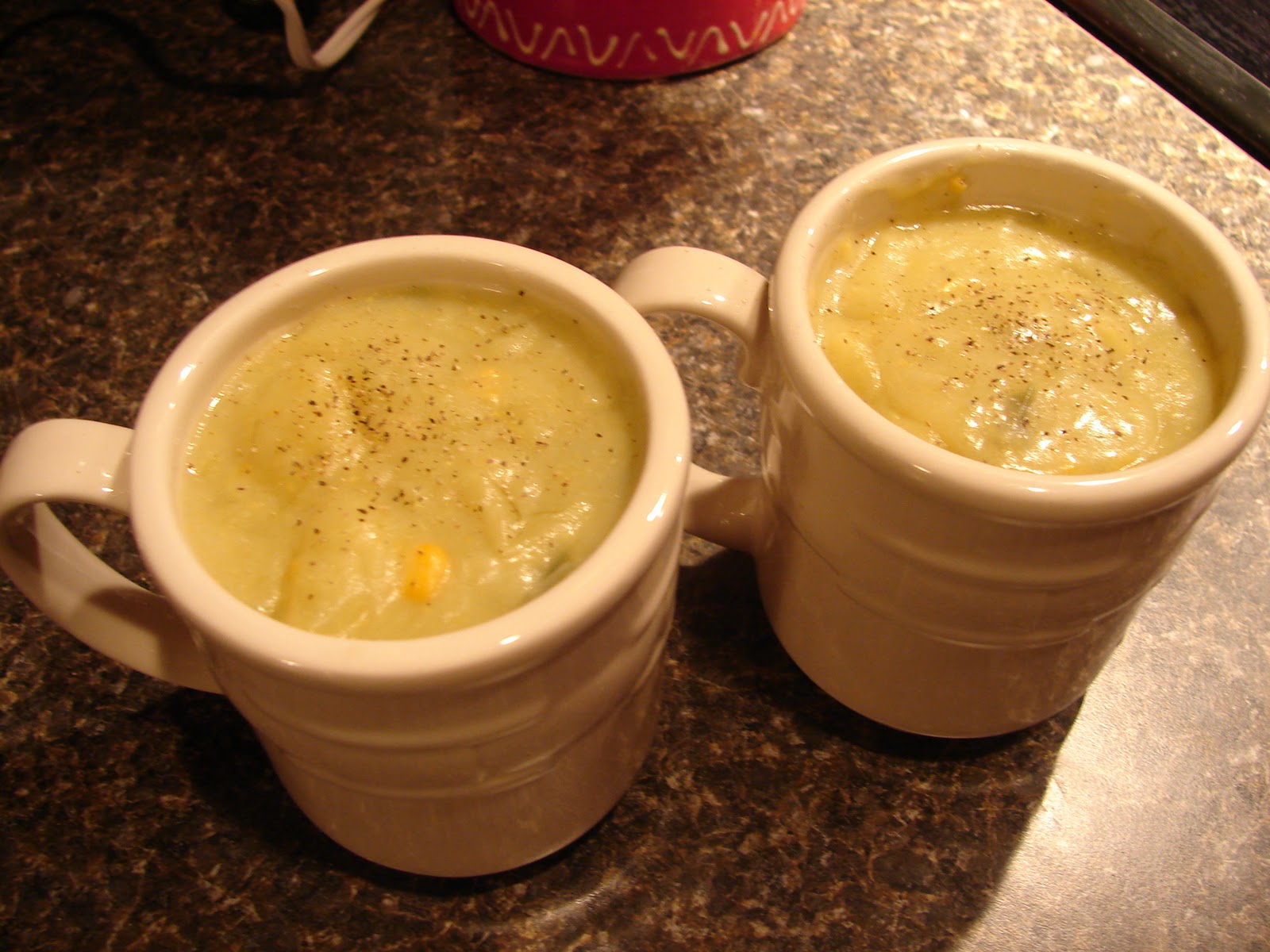
Last, but not least, share with the neighbors that let you hold their baby.


Cups for the Neighbors


Salt Crusted Prime Rib

From cookies to carne! (My first non-cookie post.) – originally posted 3/14/2011

This weekend, we were CELEBRATING! Ric finished his Ph.D. in Nuclear (Radiological) Chemistry! Instead of commemorative pocket protectors we went with Prime Rib. My Aunt Angela, Uncle Pete, Cousin Melissa and all the kids were in the kitchen at some point.
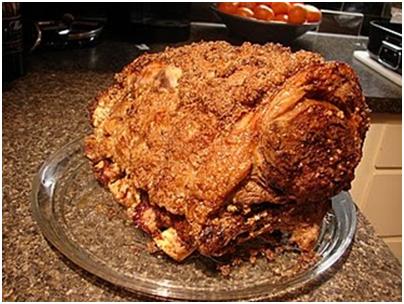

Just after we took the photo we realized we needed to re-platter.

The first time I tried roasting prime rib was after watching one of our students, (who is determined not to be a chef, except when he’s in the kitchen), pull it off for a crowd at a Christmas party. It was delicious. I came home and studied my Julia Child cookbook for a few days, and finally plunged in on Christmas day 2009 for my family, mom, dad and grandma. The results were spectacular with twice-baked potatoes, steamed artichokes and luscious white rolls.

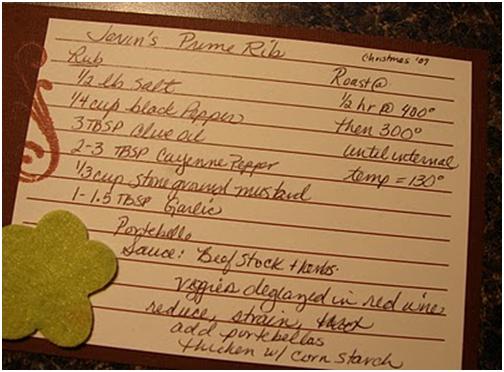
Here’s the basic recipe:


Details are lacking, but it jogs my memory.

Directions:

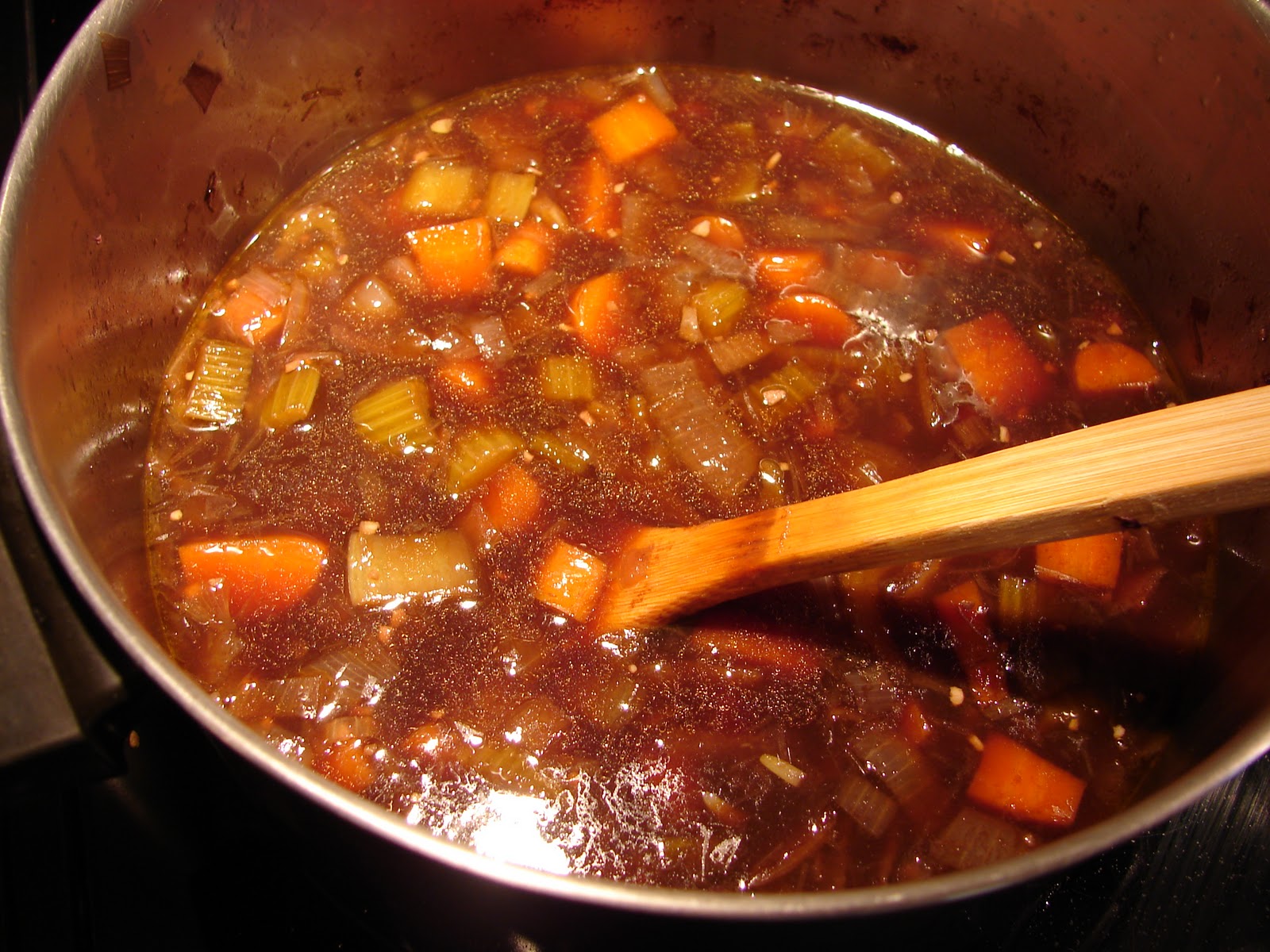
About six hours before you want to eat, Start the Sauce with Veggies and Broth – Coarsely chop two onions, a few stocks of celery and several carrots. Toss them into a sauté pan with olive oil and garlic. When the vegetables are soft, and just beginning to brown at the edges, pour a cup or so of red wine into the pan to “deglaze”. Then dump it all into the bottom of a large stock pot and pour a couple of quarts of beef broth over the top. Add a bay leaf, thyme, rosemary and black pepper to taste. Let it steam on low while the vegetables give up their essence and the sauce reduces.
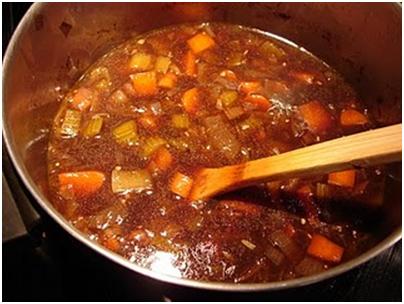

The sauce, off to a good start.

Decide on Go Time for the Meat: Divide the weight of the prime rib by 3 to figure out approximately how many hours to allow – for example: 12lbs needs about 4 hours. Just before you need to start, preheat the oven to 400, and prepare the salt crust for the meat. Mix the salt, oil, peppers and mustard in a small dish until you get a coarse paste. Rub it all over the outside of the roast.
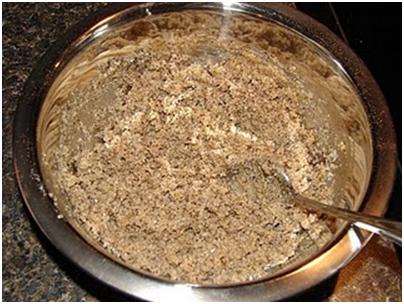

The salt-crust paste.

Place the salt encrusted meat on a roasting rack and put in the oven at 400 degrees for the first 30 minutes. Then reduce the temperature to 325 degrees for the duration. It takes 15-20 minutes per pound to get the meat to an internal temperature of 135 degrees – medium rare in the center and a little more done at the edges.
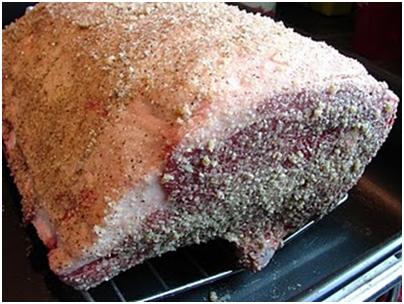

A coat to wear in the oven.

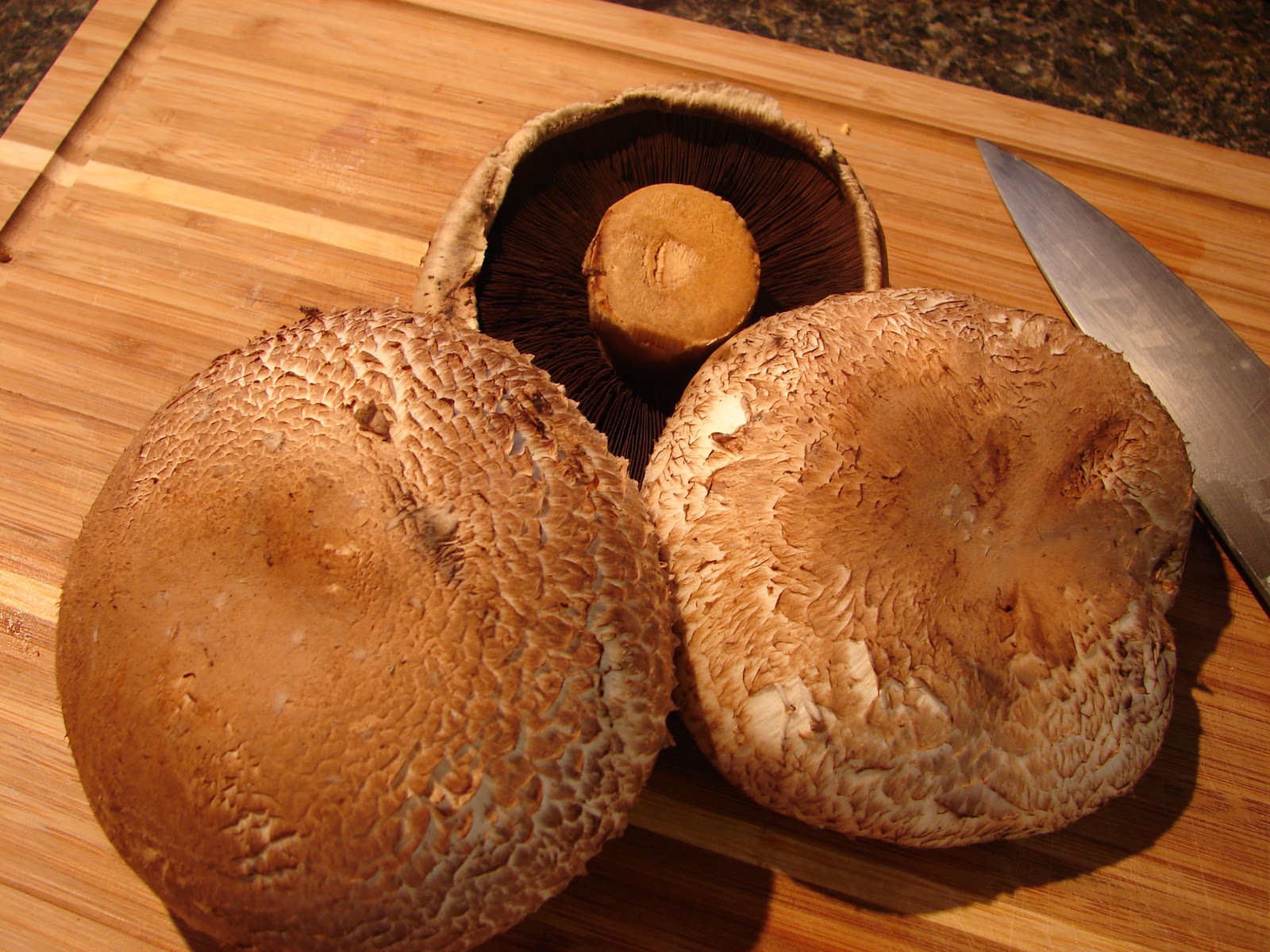
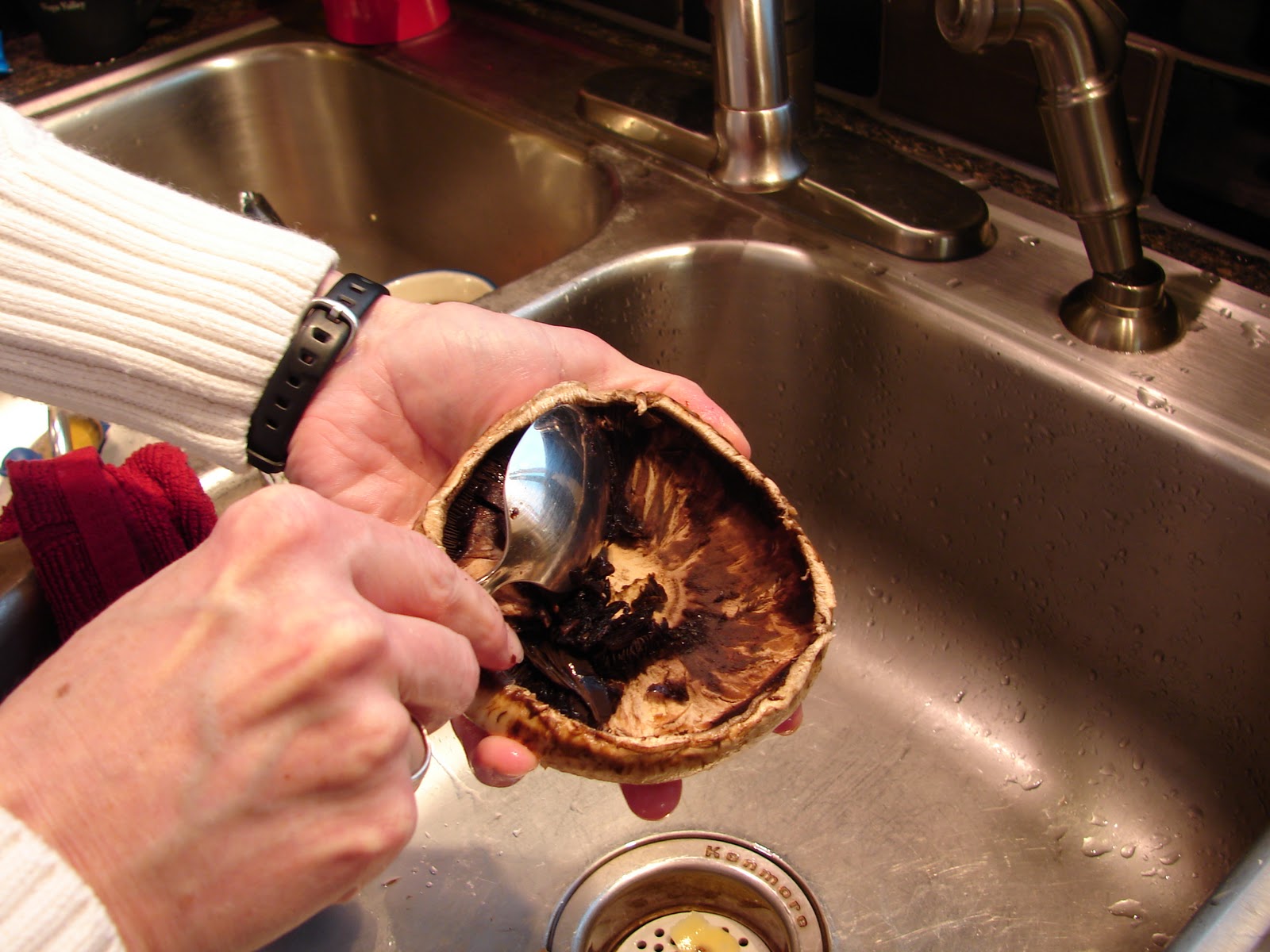
About 1.5 hours before the meal: Chop the Portobello – The earthy flavor of the final sauce comes from these flavorful mushrooms. Chop 3-4 of them – coarsely if you want children to be able to pick them out at the end, or more finely if you want a sophisticated looking version with tiny bits of mushroom. They will shrink a lot in the broth so there’s no need to mince at the start.
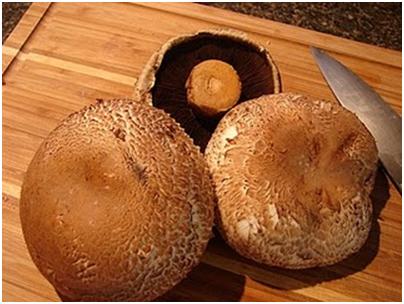

I actually don’t care for mushrooms, but these are so good!
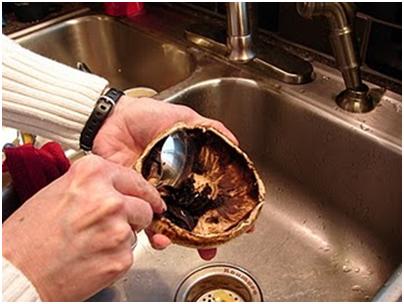

Gutting mushrooms.
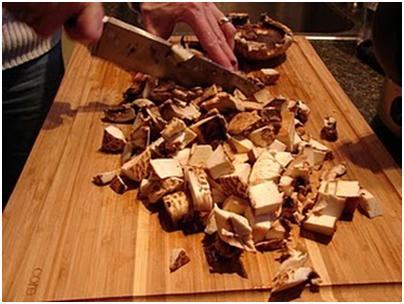

Cutting mushrooms.

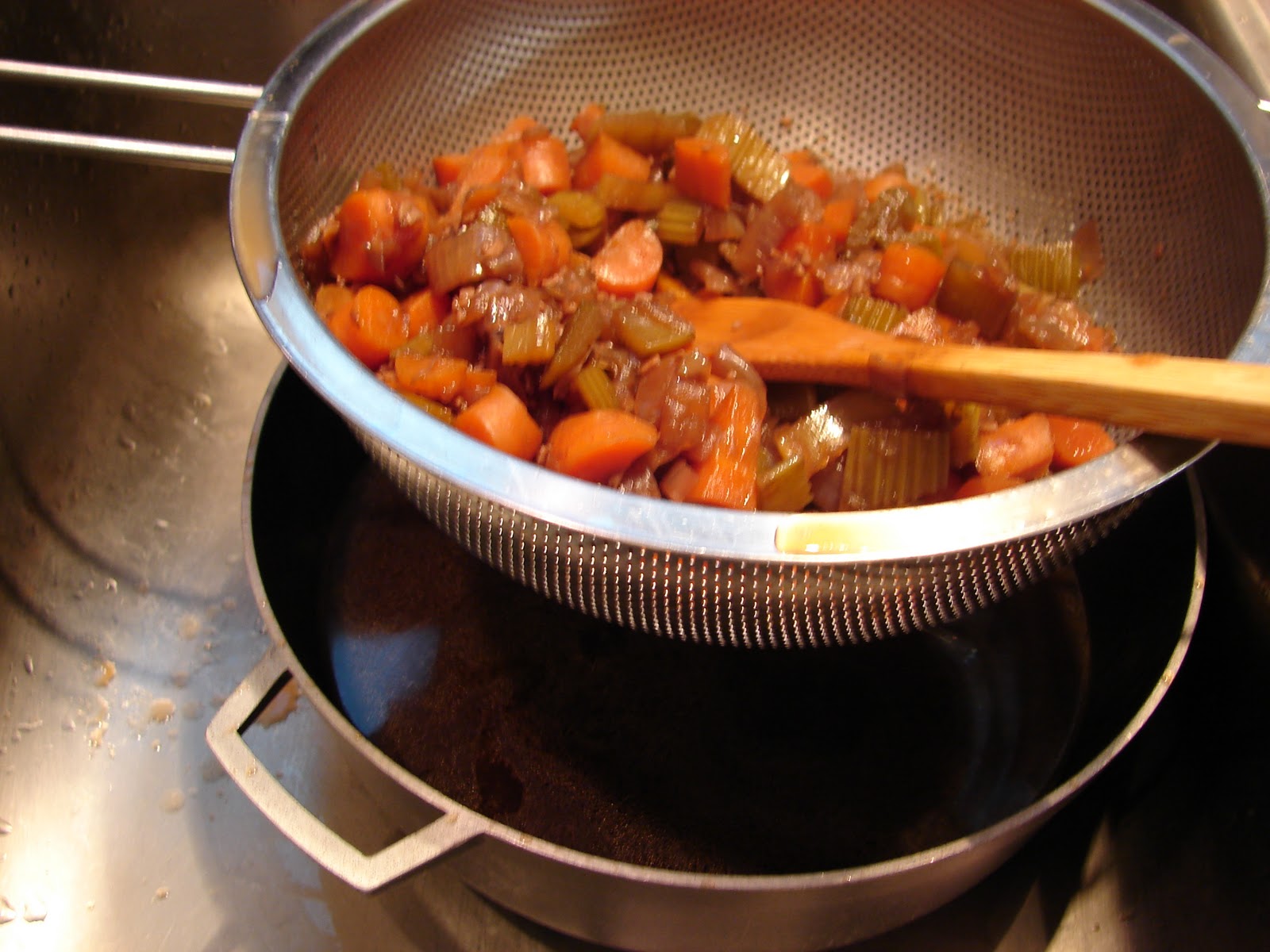
Once you have the mushrooms chopped: Ditch the Veggies – About an hour before you want to serve the meat, it’s time to remove the vegetable carcasses – their flavor is gone and they have nothing left to offer except making what would otherwise be a beautifully smooth sauce full of slimy chunks. Pour the contents of the stock pot through a strainer into another pot. Press the final juices from the vegetables in the strainer and discard them. Oops…I wasn’t going to use text-bookish words like “discard” so, how about – “plop ’em in the trash”.


The vegetables are spent. It’s time to dump them.

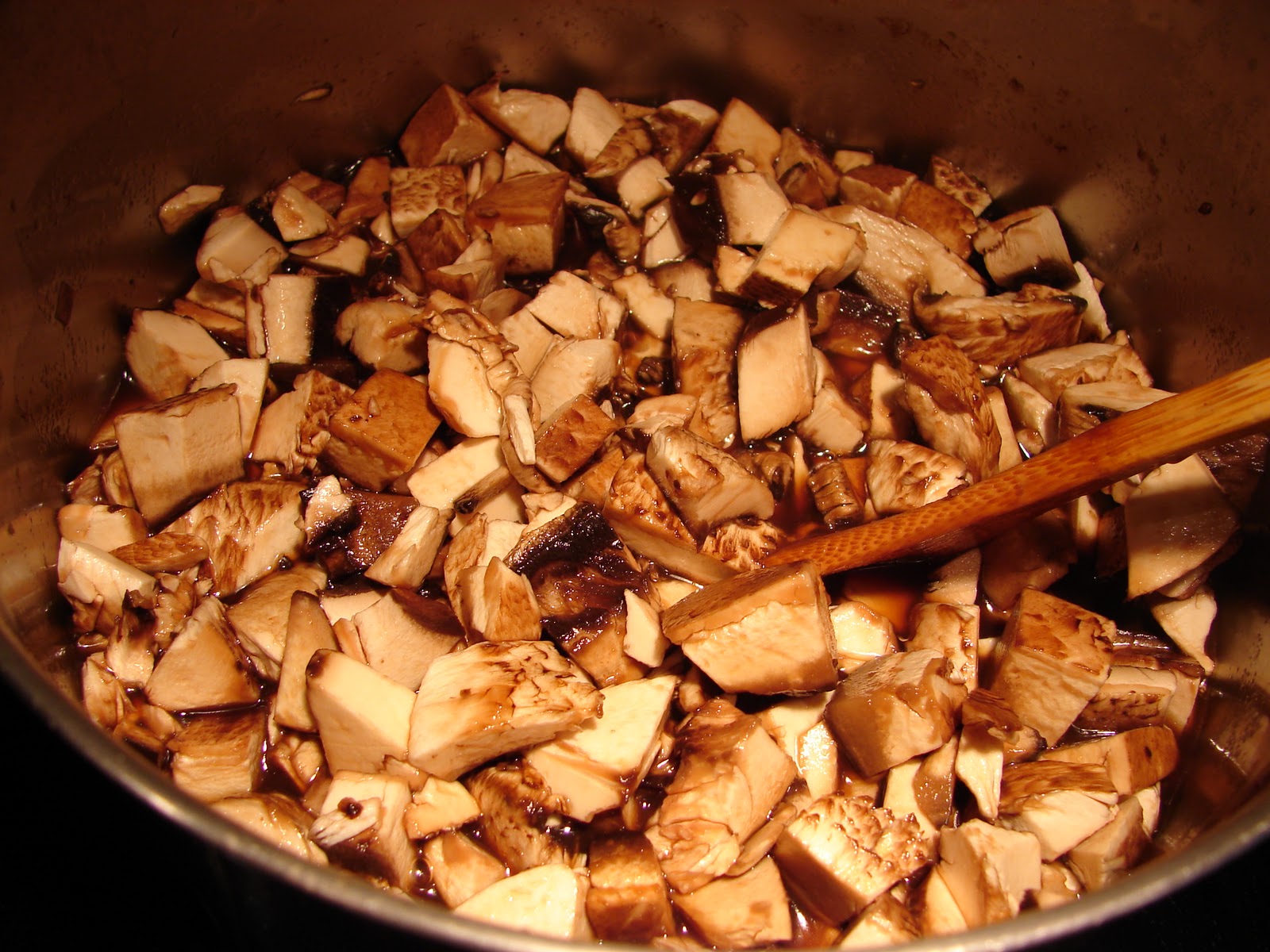
Once the veggies are out: Dump in the mushrooms and let them do their work.
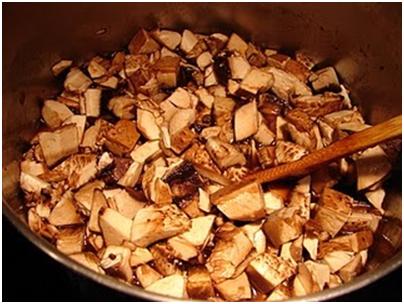

There’s broth under there somewhere…the mushrooms will shrink.

Watch the Temperature. It’s really important to have a thermometer in the meat in order to keep from wasting a very expensive cut by over or under cooking. The Javin says 130, but that’s pretty rare for the home environment where it won’t continue to warm in a chafing dish. I think that waiting until it hits 135 works a little better.

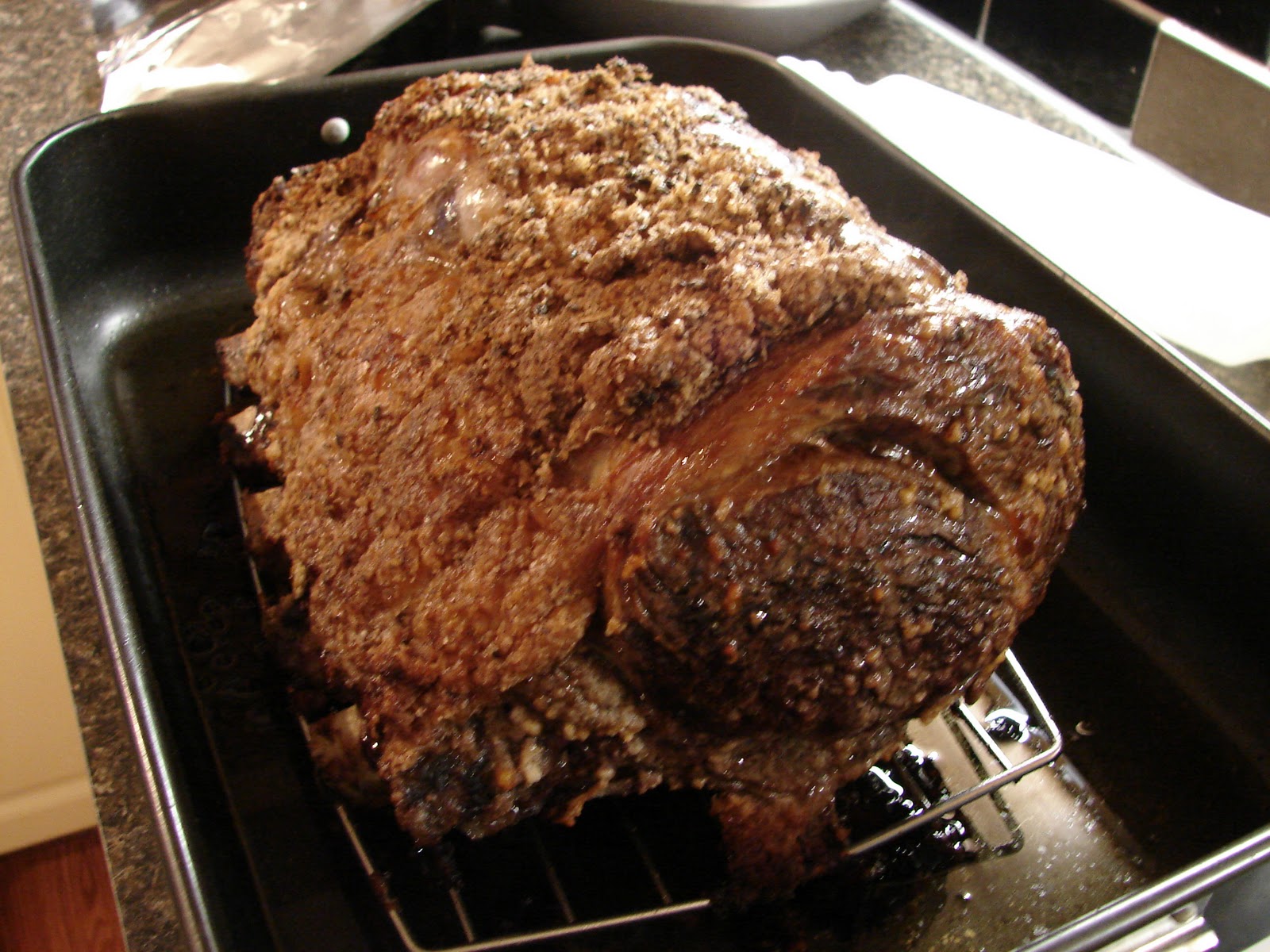
When the temperature reaches 135: Take it out! Admire it. Then put it under a loose blankie of foil and let it rest for 10-15 minutes before carving.
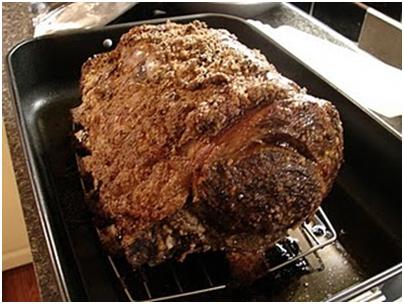

Right out of the oven.

Shhh…while the meat is resting…thicken the Sauce. Quietly, dissolve 1-2 TBSP of cornstarch in ½ cup of cold water and pour it into the fortified broth mixture. This will help thicken the sauce slightly.
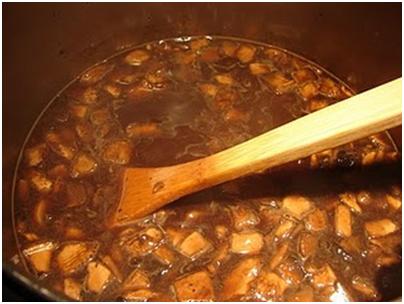

Sauce almost ready – the mushrooms did shrink!

When everything is ready, uncover the roast. Carve. Cover in sauce. Eat.

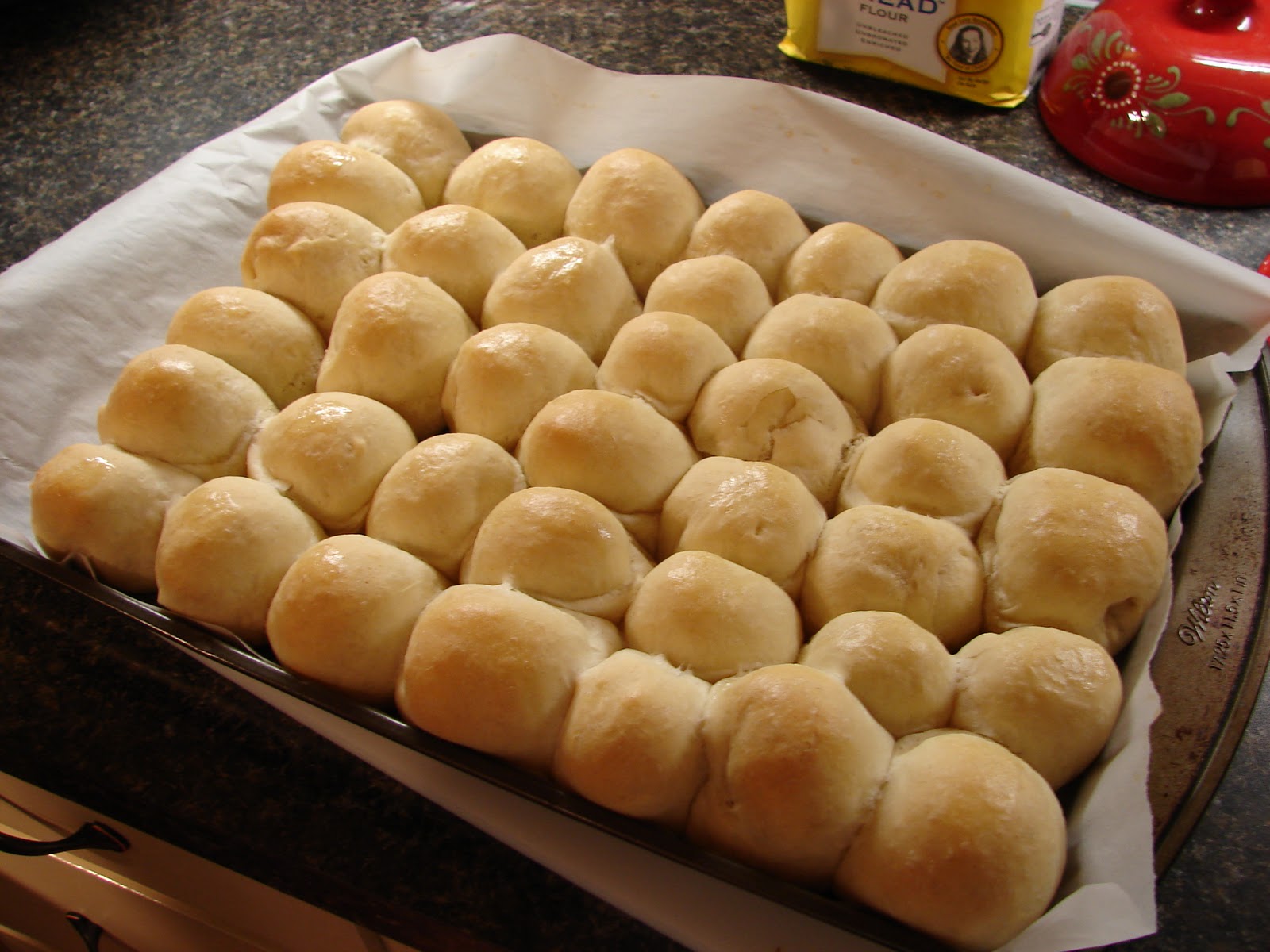
A Sprinkle of Reality: That part about quietness while the meat rests…that was a joke! All of the above would be simple and calm if we ate prime rib without any sides. But, in those gaps between steps, you have to fit the potatoes, any veggies that don’t get dumped, bread, salad and perhaps even plans for dessert. On this particular occasion we kept it pretty simple with a green salad, mashed potatoes, Uncle Pete’s homemade rolls and apple crisp with freshly whipped cream for dessert.


Uncle Pete forming rolls.


Ready to eat.


Liam working on Apple Crisp Crust.  Isn’t he cute!!
Cookie Methodology 1 – Great Ku-Ki-Do


Ingredients vary by recipe but the procedure for cookie dough is basically the same whether you’re making chocolate chip, snicker doodles or even roll-out sugar cookies.

The first step is to cream the butter and sugar – which just means mixing them together. However, the state of the butter makes a big difference in outcome.

The Butter: It has to be the real thing and FIRM! I think that stiff butter is one of the biggest factors in avoiding flabby cookies that resemble pancakes. Butter in the proper state for cookies should barely give when you press it with your finger and should try hard to hold its shape, even when it meets with the blade of your real mixer. I pull sticks straight out of the fridge and microwave them in their wrappers at 50% power for approximately 10 seconds per stick. Obviously, microwaves differ but it’s better to error with butter that’s too cold. It may hold out for a few extra seconds but the mixer will eventually win.
(Note: If you’re harboring traitorous thoughts of substitutions at this point, it’s time for you to find a new Ku-Ki-Do master. Margarine is an atrocity. Butter flavored Crisco can fill a gap if you’re a little short on butter, but only in extreme emergencies and you’ll have to live with the waxy consequences. Don’t even talk to me about applesauce unless it’s September or we’re discussing muffins.)

Balanced Sugars: Don’t skimp! These are cookies after all. Try to use the right kind and amount of brown sugar. It’s been my experience that there’s a texture difference based on the combination of sugars. The absence of brown sugar when it’s called for seems to lead to a brittle texture. I’m okay with the texture difference in some cookies, but in others, you need to stay on the chewy end of the spectrum and leaving out that hint of molasses that comes with the brown sugar zaps the chewiness.


When the butter is stiff enough, the mixture of butter and sugar should turn into a big lump that doesn’t really look “creamy” at all. (I recommend a little taste at this point! You never know when the simple mixture of butter and sugar will take on new complexities and you wouldn’t want to miss it.)

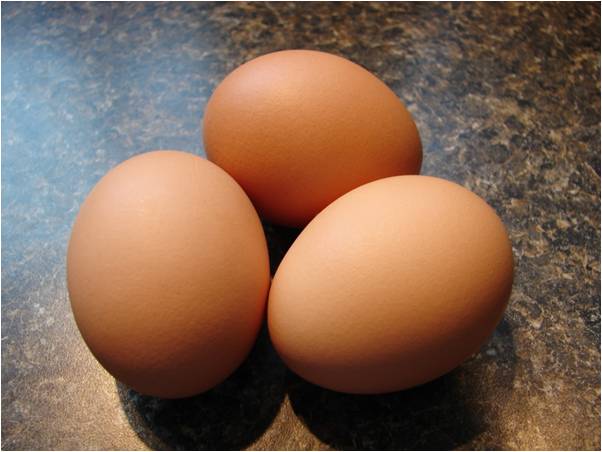
Add the Eggs: The bigger the better! If you don’t have large or extra large eggs, then add an extra white from a third egg for every two of a smaller size. Eggs have a big impact on texture and density – they help with fluff. (BTW: cage-free organic works best for the chickens involved.)


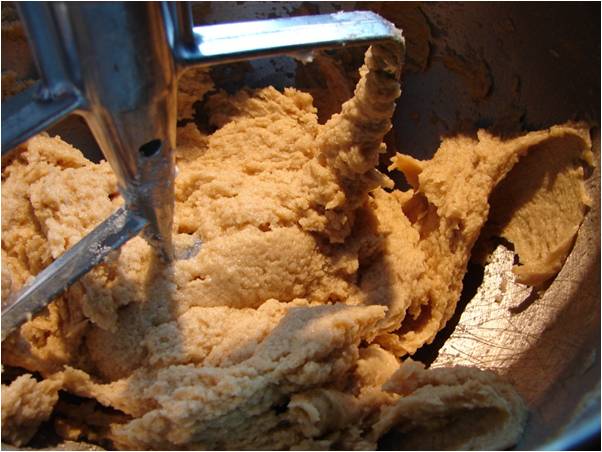
Once the eggs are mixed in with the butter and sugar, you finally achieve a texture that I would consider “creamy”.

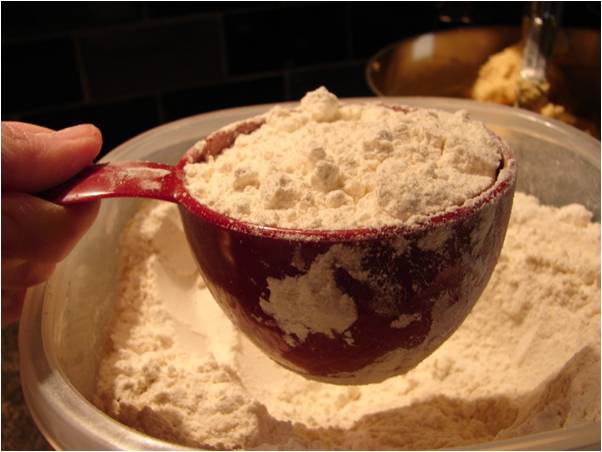
Time for the Dry Ingredient Dump: I know this is where I’m supposed to say something about sifting, and leveling and gradually adding as you go, but those of you who know me know better! I plunge the measuring cup down into the flour bin, scoop out a heaping pile then jiggle the contents until it levels itself (more or less). Then I dump it in the bowl, and go for the next cup. Half-cups are totally eyeballed and it all goes into the bowl in one big pile. I just drop the salt, baking soda, etc… in on top.


Hint: Here’s where the kitchen can get really messy. Real mixers have an impressive dust flinging radius so I usually use a technique that I picked up from my “bread
sewing machine”, which is to pull the start lever forward for a second, then quickly turn it back off so that the blade only makes about half a turn. I do this several times until the flour is starting to work into the cream, then I go to longer bursts and eventually, when the flour shower danger has passed, let it run. Another method that works equally well is to drape a towel over the whole project and let the dust billow under the makeshift tent until it all settles down.

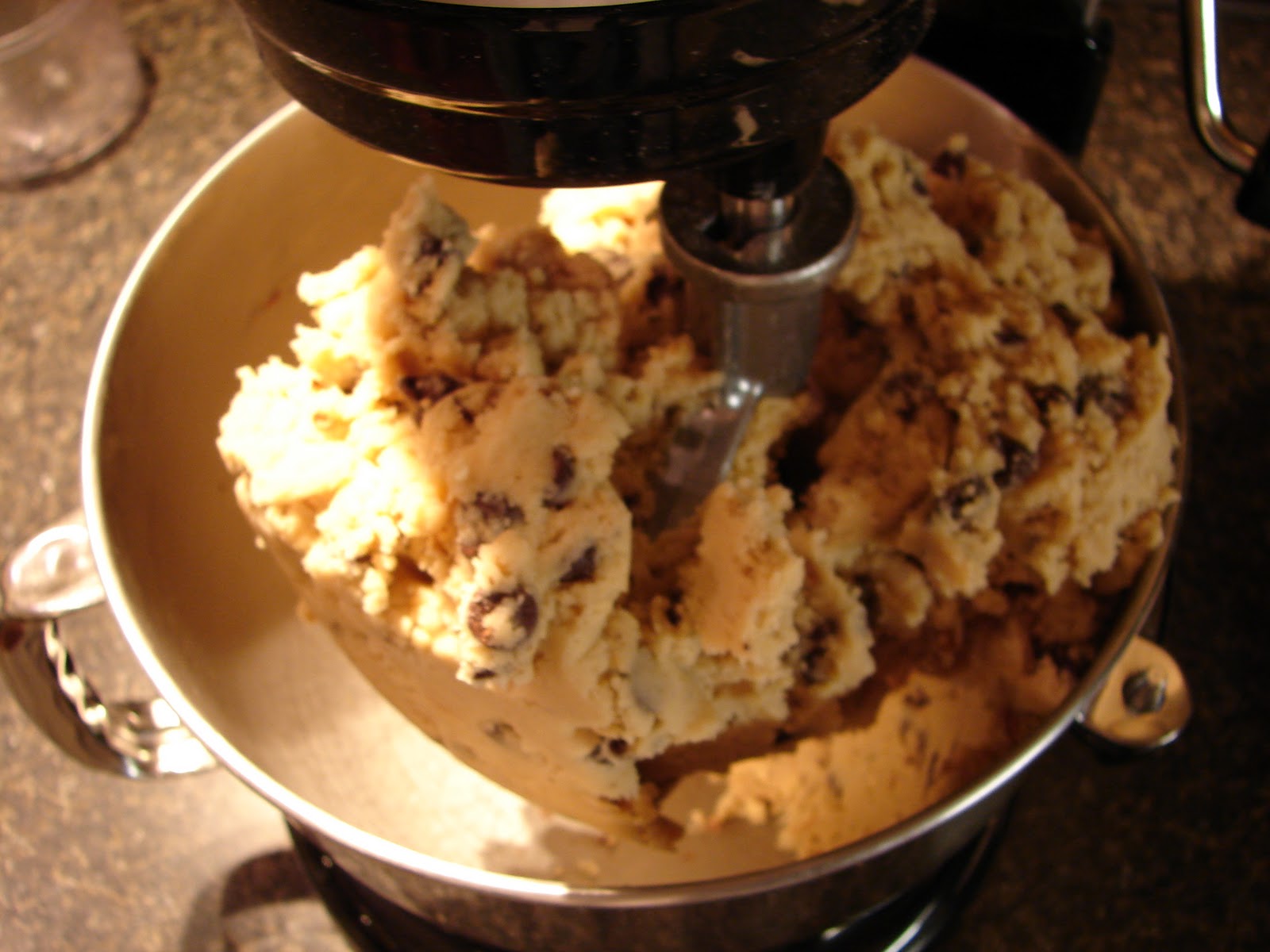
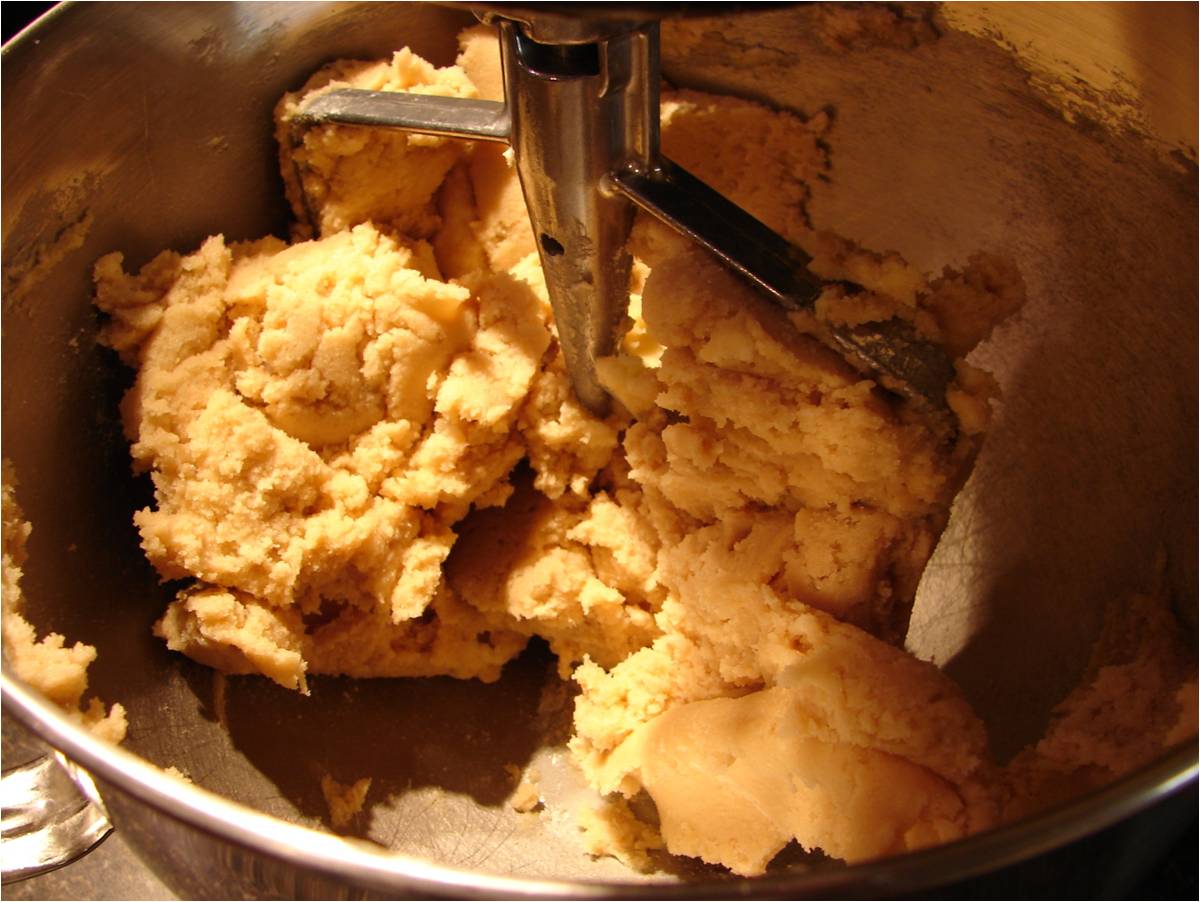
Perfect Dough Consistency: Once you mix in the dry ingredients, the dough should pull itself into a chunk of its own and give up clinging to the security of the bowl. If all of the ingredients are mixed and it’s still sticky, then gradually add more flour until it’s right… UNLESS… you didn’t follow the directions about keeping the butter stiff. If your butter started out too soft, then get ready for cookie flavored pancakes.

Cookie Hardware – Meet Darth Mixer & Friends

Here is a list of the necessary equipment for cookies in my very arbitrary order of importance.

The Mixer: You need a REAL mixer.

If you can mix your cookie dough by hand; you’re either a heck of a woman (with a wooden spoon that would strike fear into the hearts of small children) or you’re not getting the dough stiff enough.

I happen to love Kitchen Aids. When we first got married, about 20 years ago, I got a Stuff-Mart-Special mixer and it lasted about three months. So did its first replacement. Ric concluded that I must need a Super Duper Stuff-Mart mixer. He was right. It was better. I think it lasted a whole year before I burned out the motor. After some quick math he decided that a Kitchen Aide (which “they” say lasts a lifetime) would pay for itself in about two years at the rate I was burning through Stuff-Mart Specials. So, He brought home a little white Kitchen Aid with an adorable red stripe that made it about 17 years before every part and hinge had begun to rattle and the finish was worn off of both the blade and the replacement blade. In mixer mileage it probably had about 300,000 on the odometer but it was still grating cheese and turning out good cookies. I loved that little mixer – much more than one should love a simple piece of equipment.


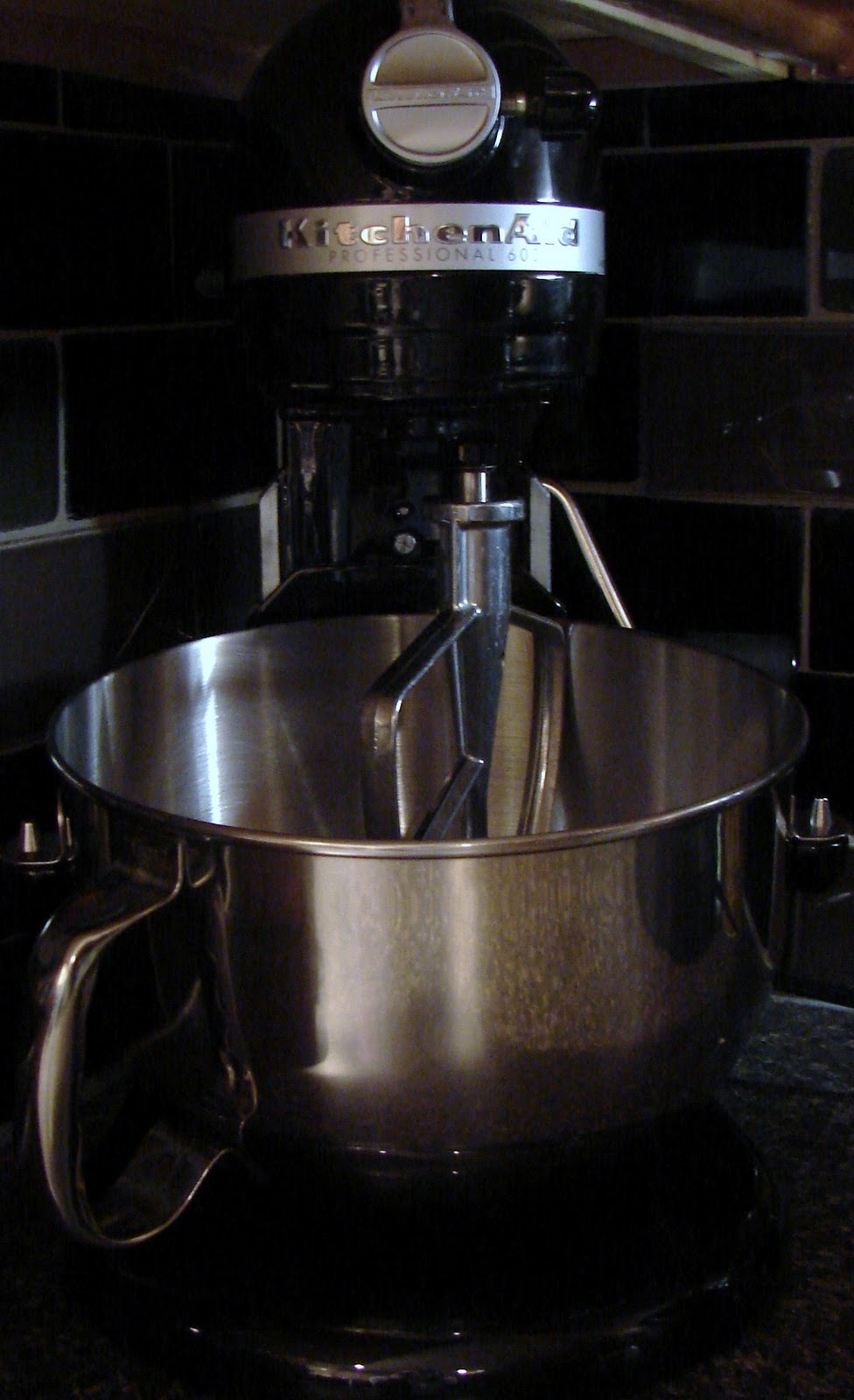
But, Ric saw the writing on the wall and for my birthday last year he seized upon a fortuitous coupon and bought me a new one.

Bom, bom, bom, ba, ba, bom,ba, ba, bom…
Meet Darth Mixer. I’m thinking of making him a cape.


Darth is much bigger and heavier than The Little Clone Trooper he replaced. They looked so cute together that I was entertaining notions of keeping them both but Ric looked  at me with furrowed eyebrows every time I joked about that. I got the hint, and now The Little Clone Trooper has gone to live in a kinder, gentler home with my friend Kara where less will be asked of him in his geriatric years. Darth and I are still bonding, which is hard with a machine called “Darth”, especially when you’re not much of a Star Wars fan. I keep trying to switch to “Darthy” but it’s not working.

Oh, my. In case the point got lost in my story, it is this:

serious cookie dough requires a serious mixer.

Next…

Baking Stone: I use a baking stone because it offers more forgiveness when you forget to set the timer. Metal pans turn out black bottoms at the slightest overheating because they conduct heat so much more readily than the air in the oven which is touching the rest of the cookie. The stone on the other hand, isn’t a great heat conductor, but it is a great heat holder which is what you want. My husband, the scientist, is cringing at my vocabulary I’m sure, but what I mean to say is that the whole process stays stable on stone. Funny, what’s built upon a rock…

Timer – If you’re as distractible as I am, then one loud enough to track you down in the laundry room and remind you that you have cookies in the oven is indispensible.

Oven Thermometer: You have to know your oven and it’s worth a minor investment in an oven thermometer if things don’t seem right. During the experimentation days at West Point I had a deranged government employee of an oven that would randomly heat to a different temperature from the dial – and not by predictable percentages. In a very aggravating way, this taught me the importance of temperature. I began to live with a thermometer on the middle rack and work with the moods of the appliance. What else can you do?

Scoops and Spoons Spatulas: For years I used a spoon and my fingers to shape the balls of dough. Now I use a scoop and my fingers, but honestly I don’t think it makes that much difference. You shouldn’t need a spatula very much if your butter is firm enough (see next post) but once in a while you have to shove around ingredients that are straying from the mixing area. A nice stiff, flat rubber spatula is what you want for this job.

Cooling rack – Probably just as essential as a real mixer, but doesn’t have to be fancy.

Cookie Philosophy 101


Before even discussing methods or ingredients I need to get a few things on the counter.

Cookies are not supposed to be health food. I’ve tried that deviant approach on my children and it just isn’t pretty.

Cookies ARE good for you – on a level that doesn’t necessarily relate to body
topography. Moderating the number eaten is the key to calorie control.  Compromising on the ingredients you dump into the mixing bowl to lower calorie count is the path to mediocrity and self-deception which leads to overeating of stuff that isn’t worth what it’s going to do to your waist line. So, take a deep breath, break out the butter and do it right. Think: excellence with self control…or just spend some extra time in the gym. Good cookies are worth it.

BIG cookies are better. They just are. Less scooping, fewer trips in and out of the
oven, better overall shape and texture. In a big cookie, there’s room for a soft center and crispy edges, not to mention that saying you ate two sounds a whole lot better than confessing to the consumption of six or eight.

BIG batches are better. If you’re going to all the trouble of mixing and measuring, why not have something to show for the effort, which leads me to the next critical truth about cookies.

Cookies are supposed to be shared. Nothing else that comes out of your kitchen is so easy to divide up and hand out! With a big batch you can feed crowds or take generous plates to your neighbors and still have a reasonable number for your own family. If you play it right, you only eat 2 or 3 out of each batch yourself –
hot and fresh, (with the possible addition of one eaten in the form of dough) and you don’t compromise the landscape of your own hips with leftover dozens.

Okay, with that out of the way, we’re ready to begin equipment
and methods…